
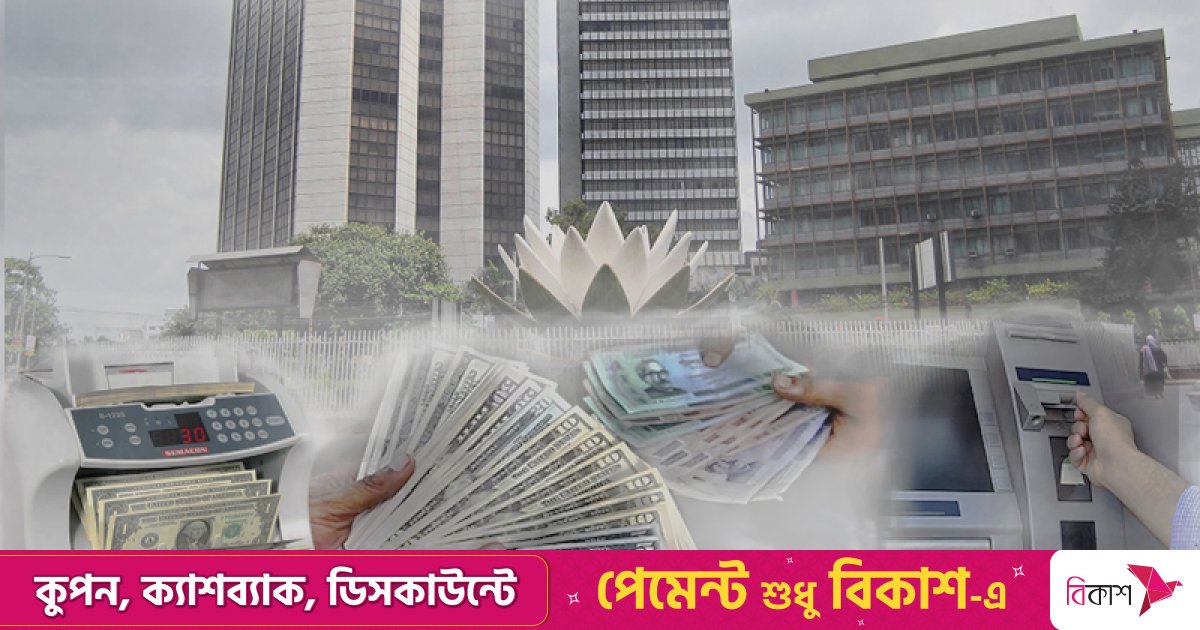
The government has taken various initiatives to develop cashless transactions or cashless society. Initiatives are being taken to popularize the issue in the upcoming new fiscal year budget. Also all cash transactions will be discouraged. In establishing a cashless society, 10 banks, 3 mobile banking services and 3 international payment systems have been initially involved in this work under the leadership of Bangladesh Bank.
Meanwhile, corporate entities dealing in cash may have to pay an additional 2.50 percent corporate tax in the fiscal year 2024-25. However, if the transaction is maintained within 36 lakh rupees per annum, then the companies can pay tax at the previous rate.
Central Bank Circular
Bangladesh Bank has taken these effective steps to facilitate cashless transactions. The regulatory agency issued a circular in this regard last Thursday. According to the circular, with the aim of making transactions on Bangla QR channel more popular, from next Saturday (June 1) to December 31, 2025, banks will be able to show this cost from their social responsibility sector (CSR) funds.
It should be noted that according to the Sustainable Development Goals, the government has set a target of making 75 percent of all small and large businesses transactions online and cashless by 2027. To advance this initiative, the cost of cashless transaction services through Bangla QR is being shown in the Bank’s Corporate Social Responsibility (CSR) sector from last year.
What is the QR code?
Bangla QR is an inter-bank transaction settlement payment platform established by Bangladesh Bank. Any bank connected to this platform, MFS customers can pay through Quick Response (QR) codes.
Bangladesh Bank has said in the circular that in all transactions carried out through Bangla QR, the merchant discount rate and inter-bank reimbursement fee at the rate determined by Bangladesh Bank can be shown as CSR. The cashless Bangladesh initiative will also cover all campaign-related expenses, all transactional and infrastructure related expenses of Qorbani Huts and promotional expenses incurred for promotion and promotion of Bangla QR. However, the expenses considered as travel allowance, accommodation, hotel bill and travel allowance of the officials of the concerned organizations in Cashless Bangladesh initiative cannot be shown as CSR expenses.
Incidentally, Bangladesh Bank has introduced Bangla QR code as part of building cashless Bangladesh i.e. cashless transaction country. Code based transactions are being done through this.
According to the circular, in alignment with the Prime Minister’s Smart Bangladesh Vision, Bangladesh Vision Plan 2021-41 and the Eighth Five Year Plan, a target of 30 percent of all transactions in the country by 2025 and 100 percent cashless by 2031 by bringing marginalized communities into the digital payment ecosystem has been set. .
According to the central bank, Bangla QR code has been introduced to bring marginal buyers and sellers under the digital payment infrastructure to achieve this target.
100% cashless transactions in 2031
The habit has already been created among the general consumer and digital transaction process is being considered on priority basis at the policy making level. In line with Prime Minister Sheikh Hasina’s Smart Bangladesh vision, a target of 30 percent of all transactions in the country by 2025 and 100 percent online or cashless transactions by 2031 has been set.
Meanwhile, NBR is thinking of installing Electronic Fiscal Devices (EFD) in all shops to facilitate cashless transactions. As part of this, the National Board of Revenue (NBR) wants to collect 1 lakh 70 thousand crores of VAT in the next financial year. To achieve this goal, the government is thinking of emphasizing electronic fiscal devices. Not only that, NBR is encouraging cashless transactions to increase revenue.
An additional 2.50 percent tax will be payable
If listed companies do not adopt cashless transaction system, they may have to pay an additional 2.50 percent corporate tax in the next financial year 2024-25. Finance Minister Abul Hasan Mahmud Ali is expected to include the proposal in his budget presentation in Parliament on June 6.
Currently listed companies with more than 10 percent free float (tradable) shares in the stock market pay 20 percent corporate tax. NBR officials said the government plans to increase this rate to 22.50 percent in the fiscal year 2024-25. The corporate tax rate for listed companies with a free float of up to 10 percent will increase from the current 22.5 percent to 25 percent.
However, if publicly traded companies comply with the condition of non-cash transactions, i.e. maintain cash transactions within Tk 36 lakh per annum, then the companies will be able to pay tax at the previous rate.
Tax rate will be reduced subject to fulfillment of conditions
According to NBR sources, the unlisted companies which currently pay 27.5 percent corporate tax, if they comply with the conditions of cashless transactions, then this rate will be reduced to 2.5 percent. The same benefit will apply to one person companies as well. That is, their corporate tax rate will be reduced from two and a half percent to 20 percent subject to fulfillment of conditions.
In establishing a cashless society, 10 banks, 3 mobile banking services and 3 international payment systems have been initially involved in this work under the leadership of Bangladesh Bank. With the slogan ‘Smart Bangladesh will be ensured in universal payment service’, QR code facilities have been provided to floating vendors including tea shops, grocery shops, hotels, cobblers in Motijheel area. Soon various divisional cities will be brought under this. This service will be gradually spread across the country.
Bangladesh Bank Governor Abdur Rauf Talukder expects that 75 percent of transactions in the country will be cashless by 2027.
That’s what the statistics say
In January 2023, more than Tk 1 lakh crore was transacted through mobile banking or MFS, but cashless transactions were Tk 7500 crore. MFS purchases, mobile recharges and service bill payments are cashless only. Similarly, transactions through debit and credit cards are about 39 thousand 757 crores. But the real cashless is 3 thousand 800 crores. Because more cash is being withdrawn from ATM booths with cards. In this case, purchases made through cards at points of sales and e-commerce are cashless transactions.
Government salaries, various institutional transactions are paid through electronic fund transfer, which is a type of cashless transaction. About 62 thousand crore rupees are transacted through electronic fund transfer every month.
In this regard, Managing Director MD and CEO of Islami Bank Mohammad Monirul Mawla told Bangla Tribune that now it is possible to do various digital transactions such as shopping, bill payment, electronic fund transfer, real time gross settlement with mobile app.
Hassle reduced in carrying cash
In a cashless society, people are now turning to using QR codes with mobile apps instead of cards. Islami Bank’s Selfin is an app-based multipurpose banking service. Currently, customers are using this app to easily manage everything from shopping to utility bills, credit card bills, bus and train tickets.
In 2019, mobile financial services and transactions between bank card networks began with the introduction of ‘wallet loading’ and ‘ad money’ facilities. Following this, services such as credit card bill payment and receiving expatriate income (remittance) were introduced later. Then on January 18, 2023, Bangladesh Bank allowed transactions through QR codes. Since then, just having an app on the mobile phone can buy anything. The price of the product or service is given in quick response or QR code. From large showroom-chain shops to sidewalk and street vendors are paying for goods through QR codes.
The journey of this ‘Cashless Bangladesh’ initiative started at the beginning of last year with around 1200 merchants in Motijheel of the capital.
According to the central bank, cash, cards or checks are used to pay for goods or services. Cash payments are risky, check payments are time-consuming and complicated. On the other hand, the use of cards requires banks or MFSs to invest heavily in building and maintaining digital payment infrastructure. As a result, card payments are expensive for merchants. Small merchants (eg: dub sellers, jhalmuri sellers, cobblers etc.) cannot bear this cost, hence the spread of digital payments at the marginal level has not achieved the desired level. The proliferation of digital payments has necessitated the adoption of low-cost solutions worldwide.
Quick Response (QR) digital payment is such a low-cost solution. Any bank and MFS account holder customer participating in Bangla QR can pay for goods or services to any bank or MFS account holder merchant.
Since the QR code is just a printed image, there is no merchant participation cost in this payment system. Therefore, the acceptance of this payment system can be taken to the marginal level.
#Initiatives #popularize #cashless #transactions #accepted #additional #tax