
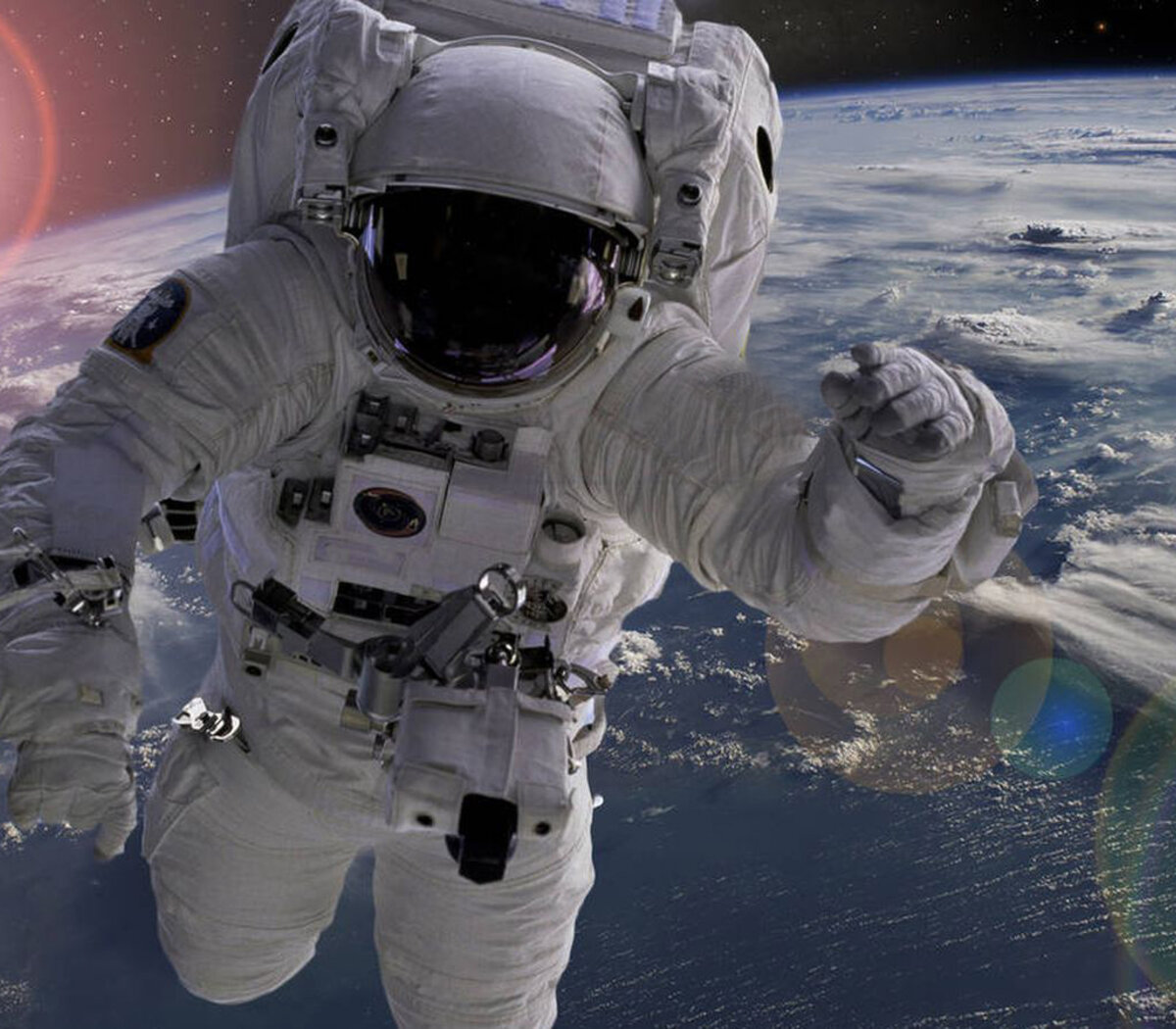
Other studies have documented problems in the immune system of astronauts
Space missions have been a source of awe and admiration since the Apollo era, but with them also come significant challenges to human health. While astronauts who participated in short missions, such as those of the Apollo program, have demonstrated surprising longevity, longer missions, especially future expeditions to Mars, present much more serious risks.
Former Apollo 8 astronaut William Anders, who took the iconic photo of Earth from the Moon in 1968, recently died at age 90 in a small plane accident, not from causes related to his time in space. Other astronauts from that era, such as Buzz Aldrin and Jim Lovell, are still alive at ages 94 and 96 respectively. This type of longevity supports recent studies suggesting that short missions to space do not cause significant health problems in previously healthy people.
However, a comprehensive compilation of studies on the effects of the space environment on the human body, published in the journal Nature, reveals that longer missions are a different story. Although most health problems subside after returning to Earth, kidney damage caused by prolonged exposure to space radiation could be permanent, jeopardizing future missions to Mars.
Since the 1970s, it has been known that the lack of gravity and radiation in space can cause bone loss, weakening of the heart and eyesight, and kidney stone formation. To mitigate these effects, astronauts perform regular physical exercises while in space. However, extended space flights, such as those planned for Mars, pose new challenges.
A significant study that used data from astronaut twins from the NASA, Scott and Mark Kelly, showed that Scott, who spent a year on the International Space Station (ISS), experienced alterations in his gene expression, the length of his telomeres, and the composition of his microbiome. Although his DNA did not change substantially, these and other changes in his health underscore the risks of long space flights.
Flights to low Earth orbit (LEO) offer some protection thanks to Earth’s magnetic field, but trips beyond, like those of the 24 people who have gone to the Moon, expose astronauts to galactic cosmic radiation ( GCR). A trip to Mars, which could last at least three years, would expose astronauts to this radiation for a much longer period.
A recent study from University College London (UCL), published in Nature Communications, examined the effects of space radiation on the kidneys. Research showed that in both humans and mice, prolonged exposure to space radiation causes permanent kidney damage. Mice exposed to radiation conditions equivalent to 2.5 years in space suffered irreversible kidney damage.
Keith Siew, lead author of the study, warns that without new ways to protect the kidneys, an astronaut could need dialysis during the return trip from Mars. «Kidneys are slow to show signs of radiation damage; By the time this becomes apparent, it will probably be too late to prevent kidney failure,” Siew said.
Stephen B. Walsh, co-author of the study, suggests that drugs developed to protect astronauts could also benefit patients on Earth, especially those undergoing high doses of radiation therapy.
In addition to kidney problems, other studies have documented problems in the immune system of astronauts traveling to the ISS, including infections and reactivation of latent viruses. Changes in gene expression and blood clotting are common. Although most of these changes are reversed upon return to Earth, some alterations persist for months.
Health in space is a critical field of research for the future of space exploration. As humanity prepares for longer, more ambitious missions, such as the journey to Mars, understanding and mitigating these risks is essential to the success and safety of astronauts.
#Radiation #trips #Mars #Risk #astronauts
2024-06-14 00:51:36