
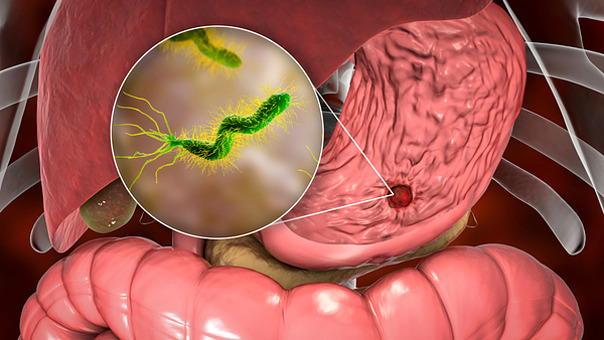
Recently, research on the relationship between intestinal microorganisms and diseases is in full swing, and research results have shown that Helicobacter pylori infection increases the risk of developing dementia.
In the case of Helicobacter pylori infection, the risk of dementia increased by up to 24%, but in the case of salmonellosis, caused by the Salmonella bacterium, the risk of dementia did not change.
A cohort analysis demonstrated that Helicobacter pylori infection increases the risk of dementia.
The results of a study on the correlation between the risk of developing Alzheimer’s disease after Helicobacter pylori infection, led by Professor Antonios Doros of the McGill University School of Medicine in Montreal, Quebec, Canada, were published in the international journal Alzheimer’s & Dementia on the 13th (doi.org/10.1002/alz.13561).
Recently, with the initiation of research on intestinal microorganisms, findings have been reported that changes in the intestinal microflora can even influence the development of depression, autism and dementia.
Professor Doros decided to analyze the real link, noting that numerous preclinical, serological and post-mortem studies conducted in recent years have demonstrated that a wide range of infectious pathogens, such as Helicobacter pylori, can influence the development of Alzheimer’s disease.
The researchers assembled a population-based cohort of all people without dementia aged 50 years and older (1988-2017) from the UK’s Clinical Practice Research Datalink.
Subsequently, newly developed Alzheimer’s cases were matched to the control group, and the risk of developing Alzheimer’s disease based on the presence or absence of Helicobacter pylori infection was estimated using the estimated odds ratio (OR) of conditional logistic regression.
Among the 4,262,092 subjects without dementia, a total of 40,455 developed Alzheimer’s disease during an average follow-up period of 11 years.
As a result of examining Helicobacter infection, the risk of developing dementia in infected people was 11% higher than in people without infection (OR 1.11), but no relationship was found between Salmonella infection and the risk of dementia (OR 1.03).
The increased risk of developing Alzheimer’s reached a maximum of 24% 10 years after Helicobacter infection, and no change in risk was found based on age or gender.
“The results of this cohort analysis demonstrate the concept that Helicobacter pylori infection is a potentially modifiable risk factor for the development of Alzheimer’s disease,” Professor Doros said, adding that “this supports the need for clinical trials randomized”.
2024-01-02 03:04:15
#Helicobacter #infection #increases #risk #dementia.. #Increase