

The NC7 field is located in the Hamada area and was explored more than 45 years ago. It is 100% owned by the Gulf Oil Company, a subsidiary of the National Oil Corporation. The field was neglected due to the state’s lack of interest in gas at that time and was not developed.
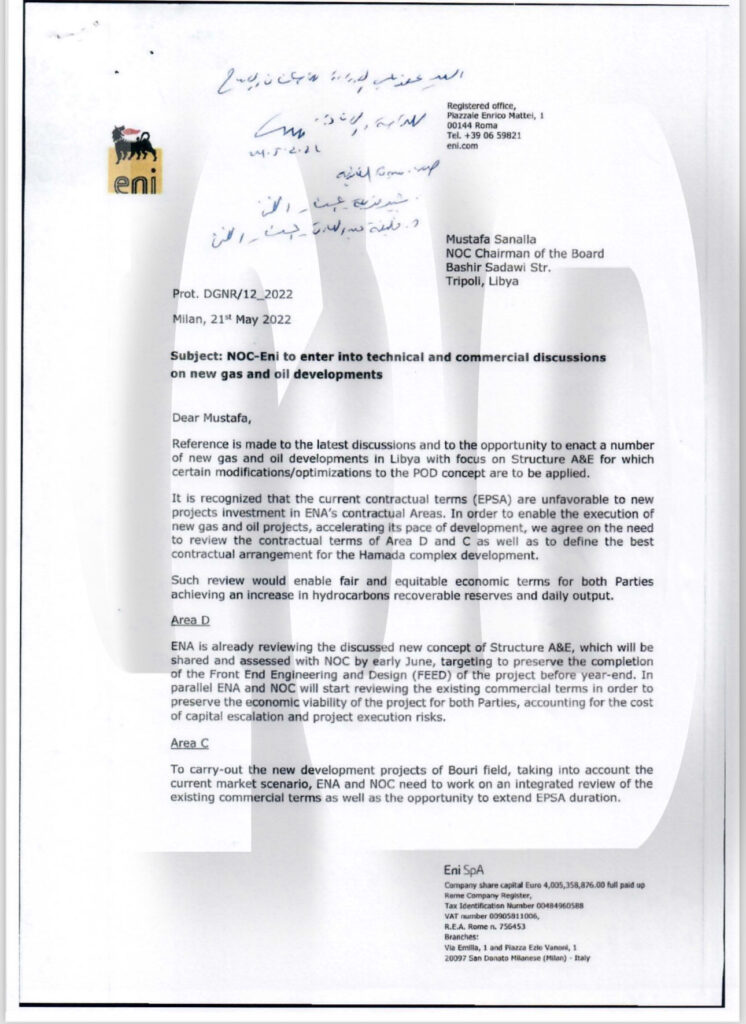
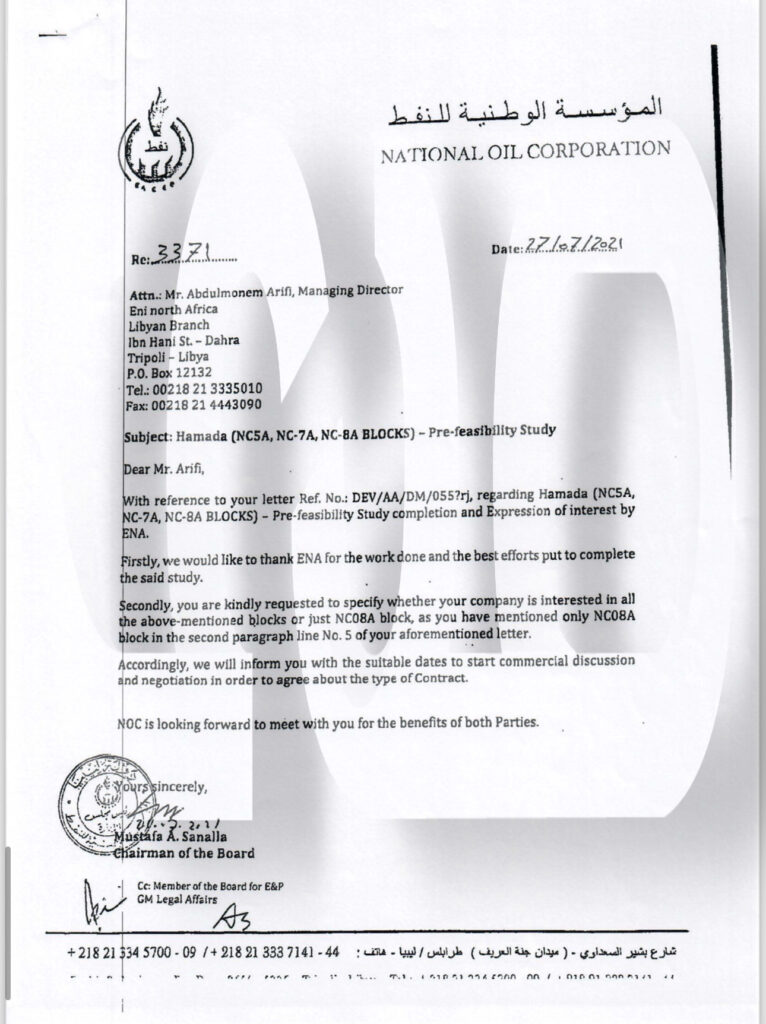
According to documents obtained by Sada Al-Iqtisadiah and private oil sources, in 2019, Sanalla, the former head of the National Oil Corporation, asked the Spanish company Repsol, the Norwegian company Equinor, and the Italian company Eni to study the field from an investment perspective.
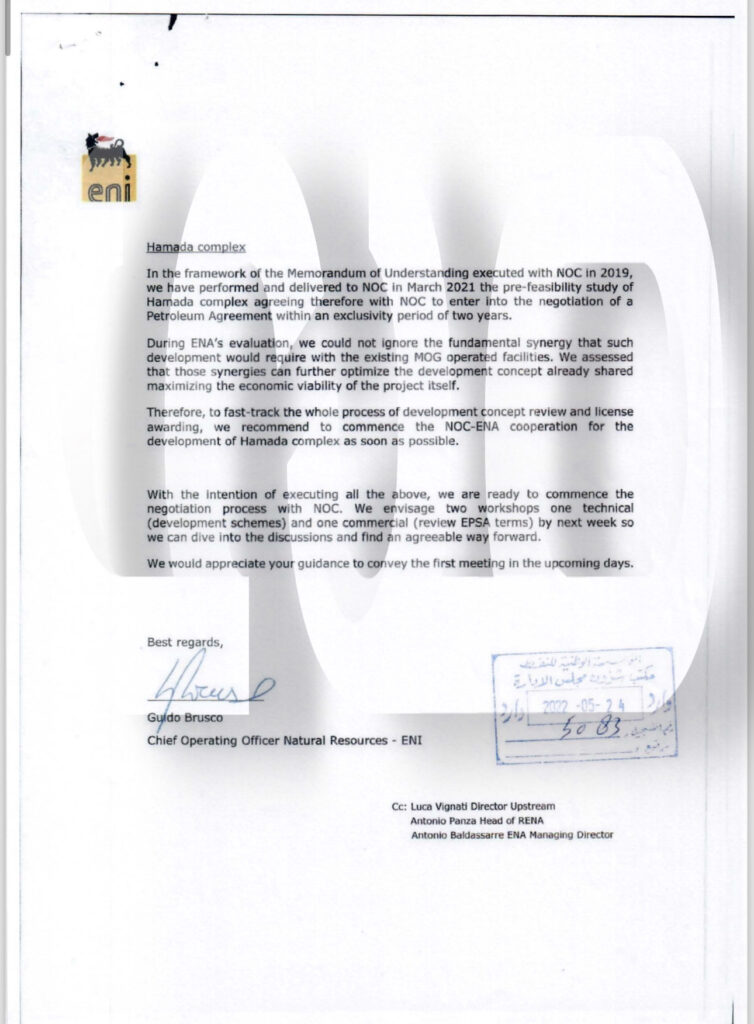
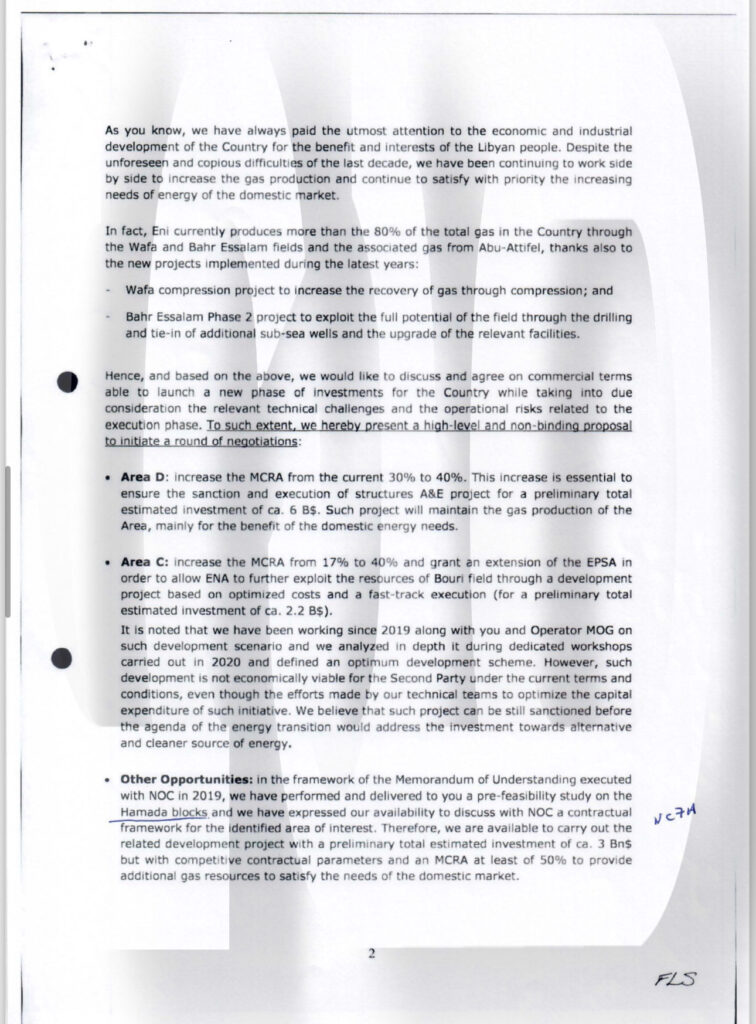
Repsol Equanor and Repsol did not express interest, while Eni expressed its willingness to negotiate and signed a memorandum of understanding with the corporation in this regard on 9/4/2019.
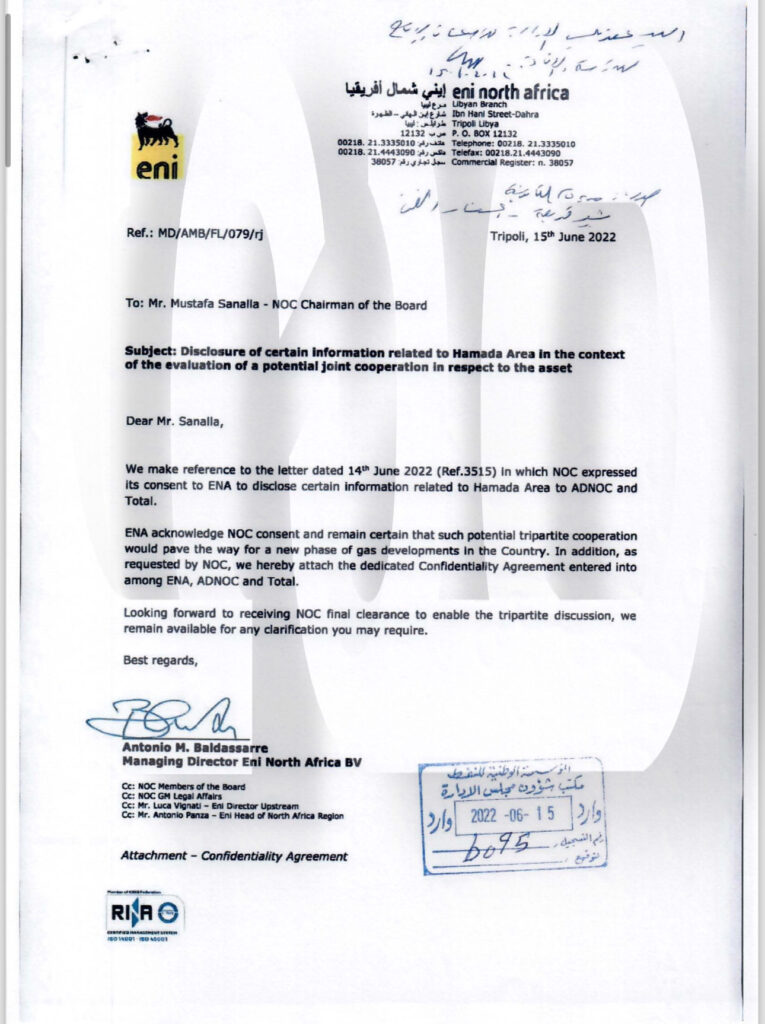
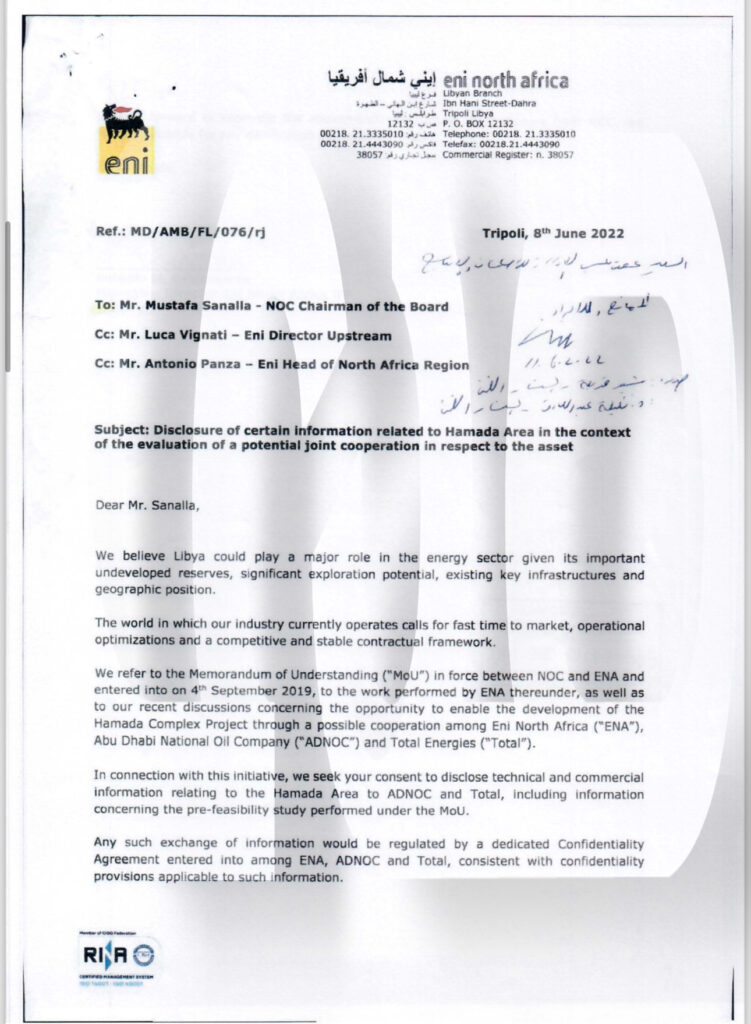
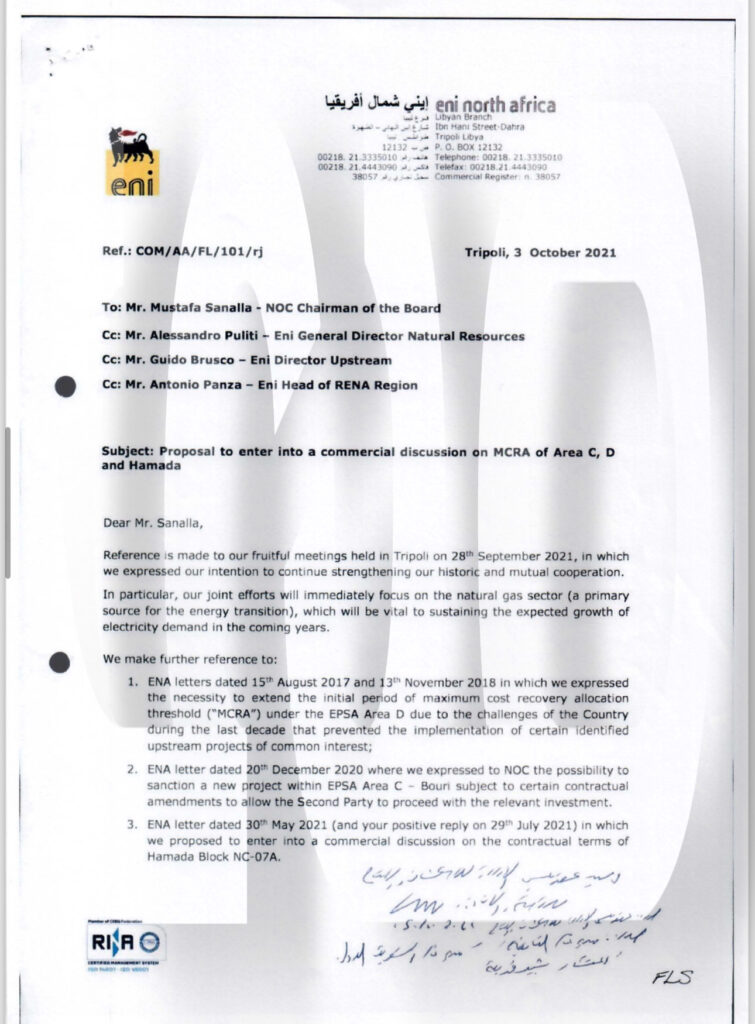
On 6/8/2022, the Italian Eni wrote to Mustafa Sanalla, Chairman of the Corporation’s Board of Directors at that time, asking him not to object to including the UAE’s ADNOC and the French Total to form an investment alliance for plot NC7 in the Hamada area.
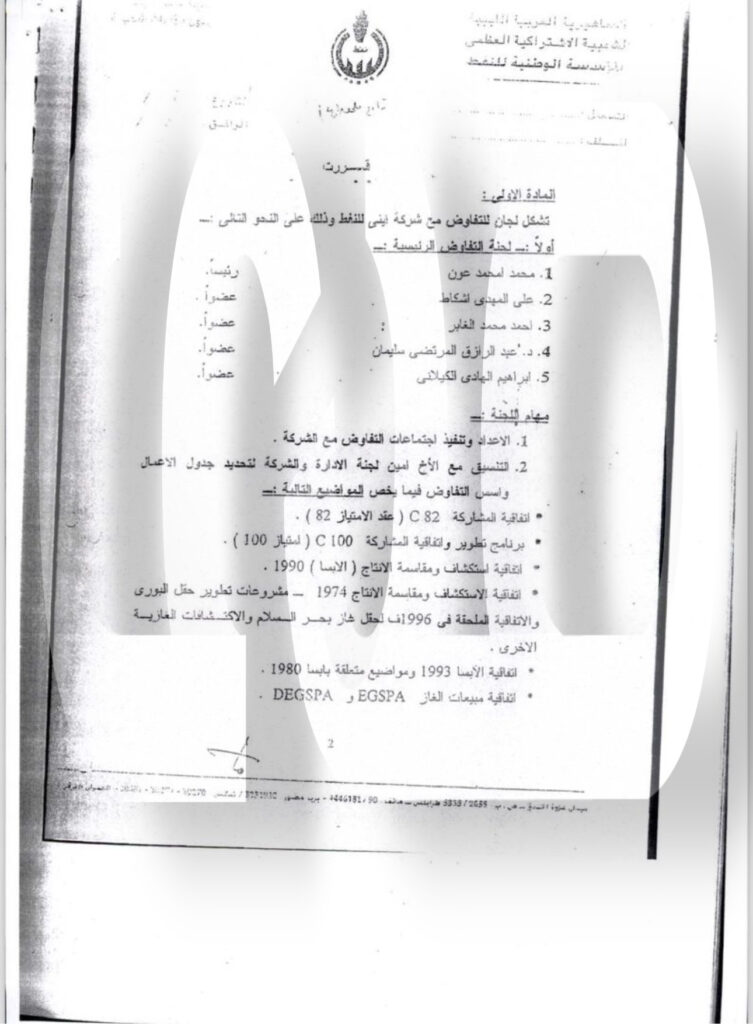
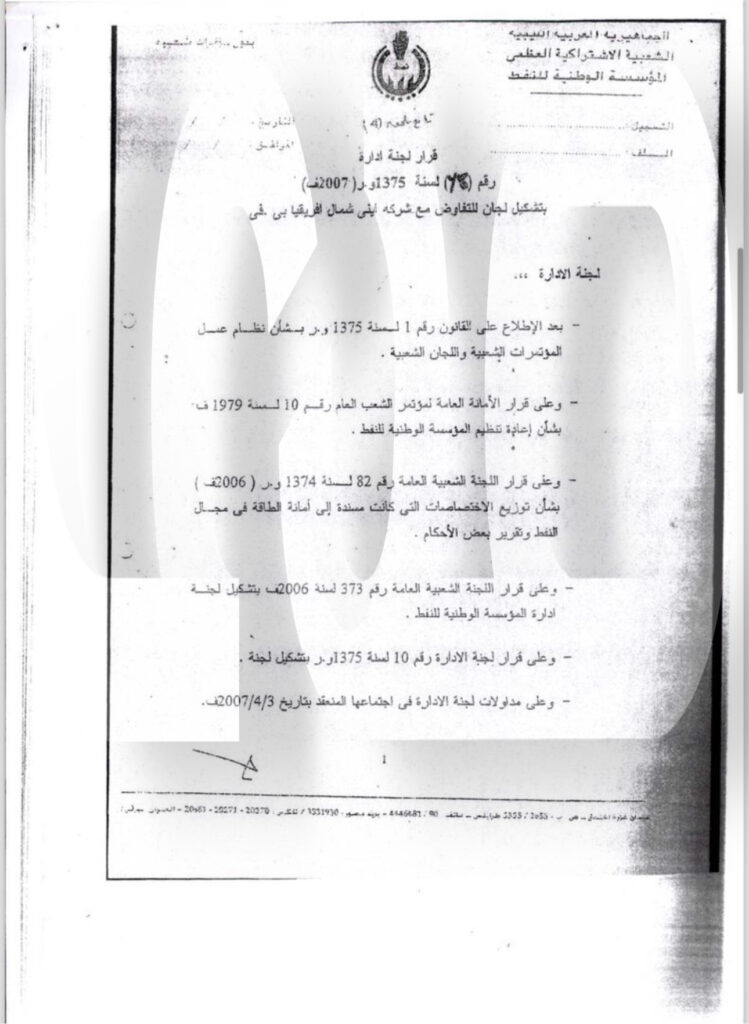
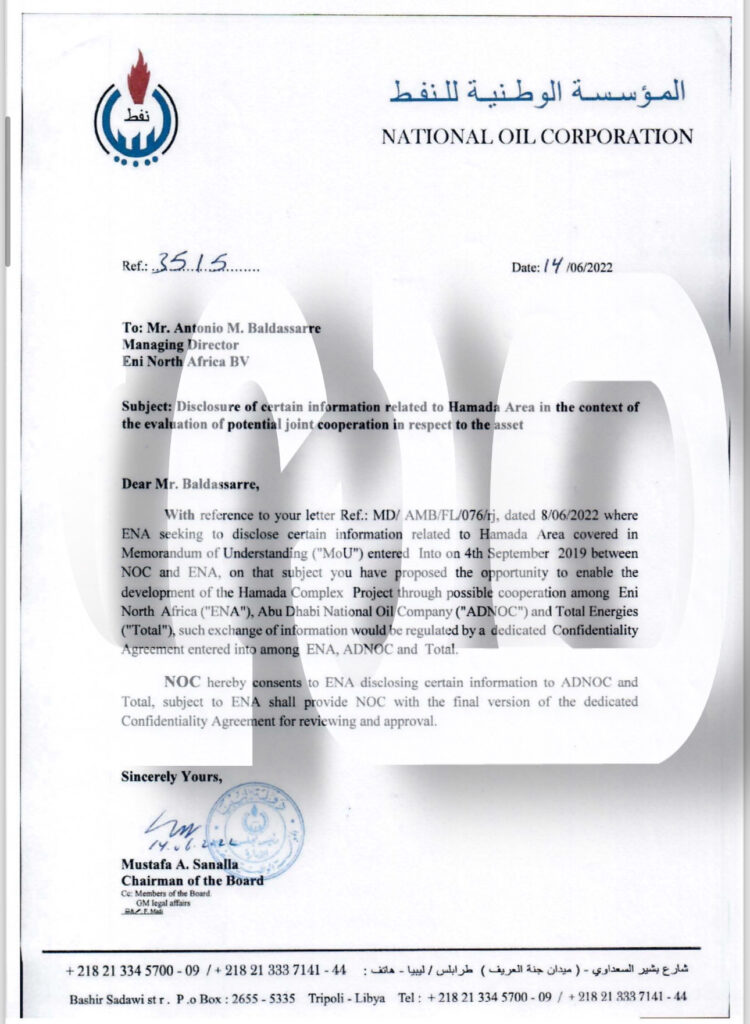
Sanalla also responded with approval and no objection on 6/14/2022 in a letter bearing reference number 3515, and on 6/9/2022, the decision of the Board of Directors of the National Oil Corporation was issued with Sanalla’s signature to form a committee to negotiate with the Italian Eni regarding the undeveloped fields in the Hamada area, which includes the NC7 field.
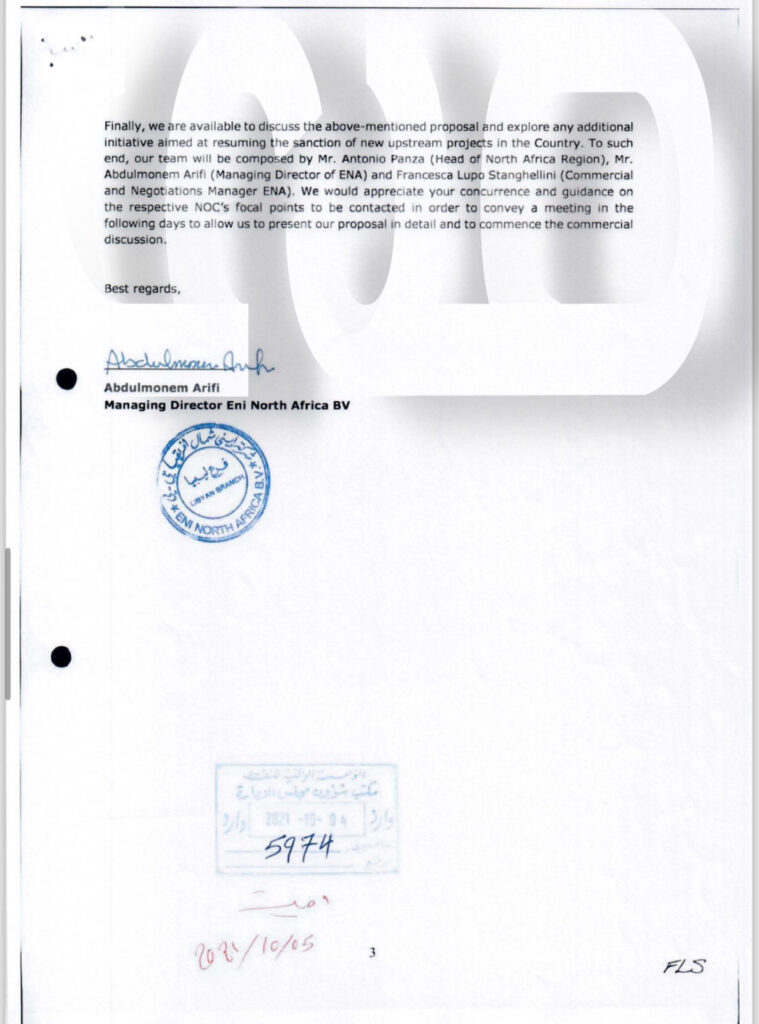
Eni stated in its correspondence on 10/3/2021, where it referred to a memorandum of understanding regarding Hamada, that it would like to determine its percentage of cost recovery from NC7 field production to 50%.
After Farhat Ben Gaddara became Chairman of the Board of Directors of the National Oil Corporation and Sanalla was dismissed by the Government of National Unity, Ben Gaddara reconstituted the negotiating committee regarding the Hamada area and set conditions that Eni considered impossible, including that the percentage of cost recovery be less than 40% and that the partners undertake to pay all the field’s exploration expenses throughout its history.
On the other hand, Bin Qadara officially requested the Council of Ministers and the Energy Council to provide the necessary funding for the institution to develop the field independently, but the Council of Ministers’ directive was that it was not possible to finance the field development operations from the Central Bank of Libya and the Libyan Investment Authority, and therefore it was necessary to return to the memorandum of understanding signed with the Italian Eni.
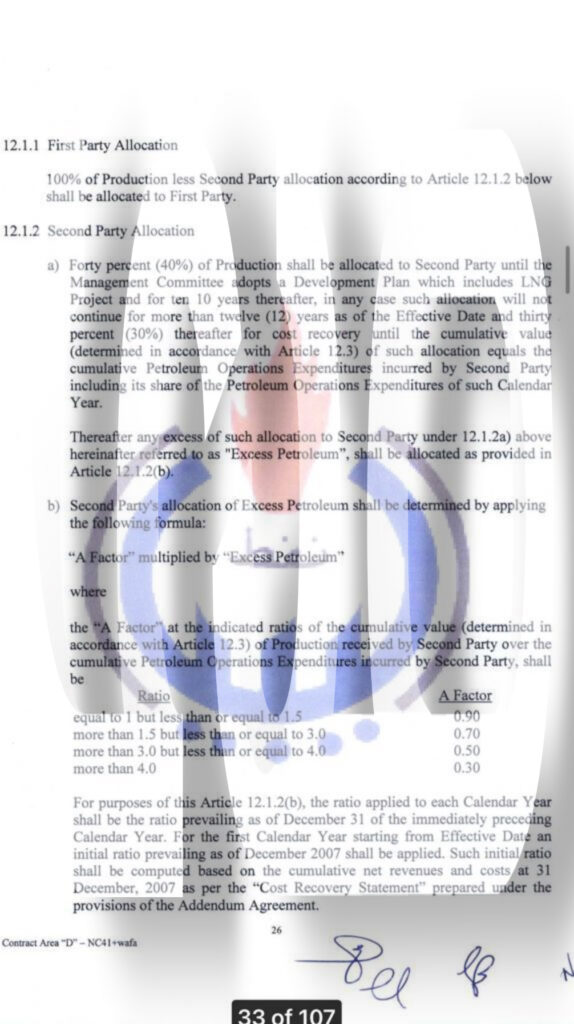
Aoun gifted the Italian Eni 40% of the production of the Wafa field in 2008, and today he opposes it in the Hamada field and sees it as a betrayal of the homeland, according to private sources.
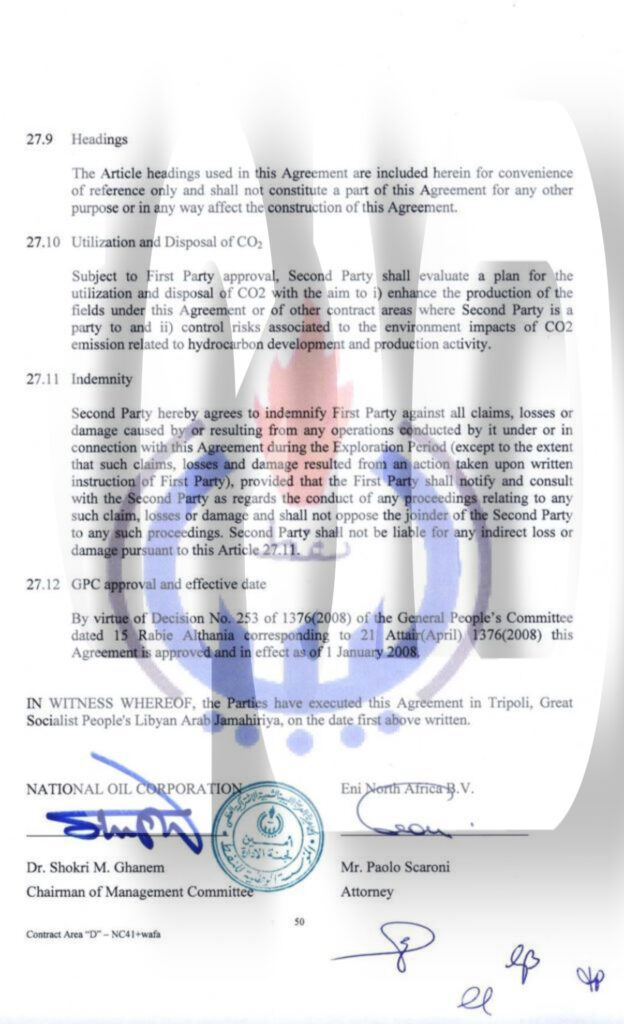
In 2008, Mohamed Ahmed Aoun was appointed as Chairman of the Mellitah Company Management Committee by the then Chairman of the Oil Corporation, Shukri Ghanem. He was also appointed Chairman of the Negotiating Committee for the region and the Wafa Field with the Italian Eni. It is worth noting that the Wafa Field is considered the largest gas discovery in Libya and was owned by the Sirte Company. It was not funded for its development, nor was the NC7 field in the Hamada area funded.
The results of the negotiations led by Aoun were to grant the Italian Eni 40% of Al-Wafa’s production to recover expenses, with the payment of only 60 million of exploration expenses, knowing that Al-Wafa’s production and size are many times greater than the NC7 field. So why did Aoun agree to this percentage in 2008 and oppose it today and accuse the institution of treason?
It seems that the NC7 case has taken another political turn, after the issuance of a statement by the House of Representatives and the Supreme Council of State, in which they demanded that its procedures be stopped, while it was opposed from the beginning by the President of the Audit Bureau, in periodic letters stating his rejection of it, in addition to a recent intervention by the Attorney General after complaints from the Minister of Oil “Aoun” and a number of oil sector experts. This case was also classified as a case of conflict between countries and others, with orientations attributed to a number of opposing and supporting figures as well.
As a responsible oil source said; In November 2023, Mohamed Aoun, the Minister of Oil, visited Doha on the sidelines of the Doha Economic Forum and met there with officials from Qatar Energy. Since his return, he has waged a war on the institution regarding the NC7 field and ADNOC to the point that he opposes the negotiation terms and the same clauses that he negotiated when he was head of the negotiation committee in the Al-Wafa field in 2008. However, he was present at the third energy council meeting in which Ben Qadara provided the institution with funding to develop the field and did not oppose the institution’s directive to negotiate with Eni at that time. What changed after Mohamed Aoun’s visit to Doha?
In a recent development of events, the Public Prosecutor, “Al-Siddiq Al-Sour,” said during his answer to the question of the Sada Economic newspaper that the reason for stopping the negotiation procedures for the NC7 block lies in complaints submitted by a number of oil experts and the Minister of Oil, and that the prosecution’s investigation is serious and valid..
Finally, the Libyan judiciary’s opinion remains the decisive factor in this case, and everyone is watching and waiting. So where will the conflict in the Libyan oil sector lead this time!!

You can also read the news in the source from the Sada Economic newspaper
#documents #sources #secrets #developing #NC7 #Hamada #field..and #Sana #Allah #rejects #Aoun #contradicting
2024-06-29 20:20:46