

It is the largest political party in the country, has a notable presence in the Government and Congress, in union and social organizations, and is preparing for an electoral campaign to increase its vote, which is around 9%, and have more mayors , councilors, regional councilors and aspires to three governorships. It is a community that, despite the fact that some try to place it as “from the past”, gravitates towards contemporary proposals such as the 40 hours of weekly work day, the right to legal abortion, the idea of a tax on 1% of the super rich, to obtain some 6 billion dollars for social spending, specify the law of “a life free of violence” for women, guarantee that water is a public good, have a royalty miner, declare lithium and copper of national interest, advance to another pension system, advance health reform, guarantee constitutional rights of indigenous peoples and have a unicameral system by eliminating the Senate, among other initiatives. An organization that had among its ranks personalities such as the Nobel Prize in Literature, Pablo Neruda, Víctor Jara, Violeta Parra, Francisco Coloane, Isidora Aguirre, José Balmes, Roberto Parada, María Maluenda, Volodia Teitelboim, Marés González, Patricio Manss, Sergio Ortega, Luis Corvalán, Gladys Marín and Mireya Baltra.
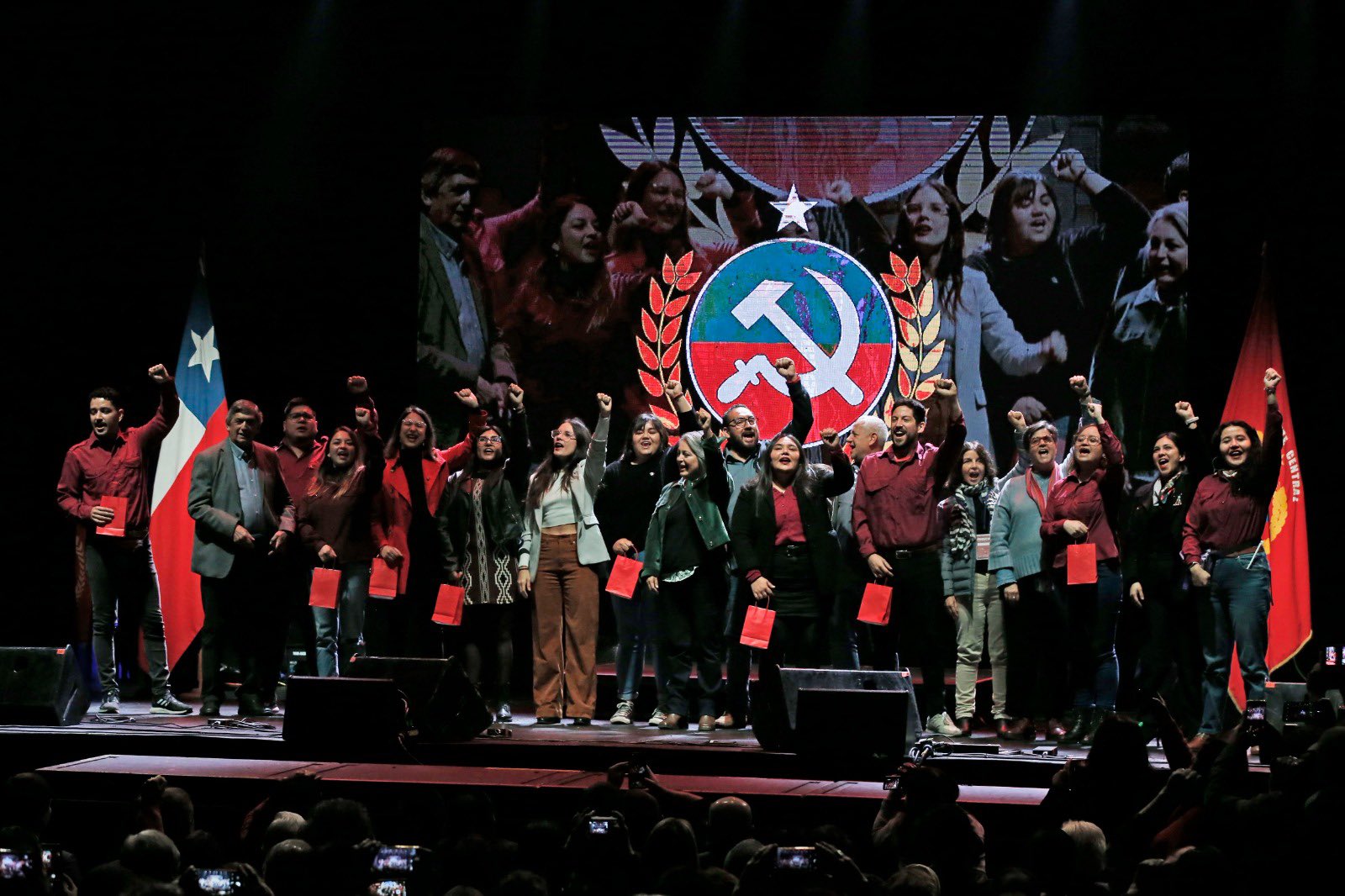
Hugo Guzman. Journalist. “The century”. Santiago. 4/6/2024. This June 4, 2024, the Communist Party of Chile (PC) reaches 112 years since its founding. More than one hundred years as a political community. So long, that one could think that it is a community “from the past” and anchored in other times. But the events of this period indicate that the PC is an incident in the political, electoral and social scenario, and a protagonist of these transcendent periods of national reality.
In hard institutional data, the PC is the largest Chilean political party, with around 45 thousand members, according to the Electoral Service. It has a parliamentary bench of ten deputies, one senator and one senator. In the current Government, three of its members hold ministerial positions and several are undersecretaries. It has six mayors, more than 150 councilors and 21 regional councilors. Karol Cariola is currently president of the Chamber of Deputies, a position held for the first time by a communist activist.
Members of the PC are part of union and social organizations such as the Unitary Central of Workers, National Group of Tax Employees, the Federation of Students of the University of Chile, College of Journalists and College of Teachers, Ranquil Peasant Confederation, groups of Relatives of Detainees Disappeared and Executed Politicians, among several others. Communist militants are present in neighborhood, cultural, territorial, indigenous and settler organizations.
In these months, the Communist Party began its XXVII National Congress which, among other things, will adjust its strategic program, define its political line and give way to the election of its new national leadership, including the positions of president and general secretary. of the community.
Within the framework of the next municipal elections, he presented a list of 40 candidates for mayor throughout the national territory, many with a wide possibility of election, which could increase the number of communes in communist hands, which currently are six. The Communist Party is preparing dozens of nominations for councilors throughout Chile, which would influence an increase in the national vote for the hammer and sickle party.
Dozens of candidates will also be presented to the regional councils and it is considered to have candidates for governors in at least three regions.
In the contingency, the PC faces the order issued by a judge for preventive detention to one of its prominent leaders, Daniel Jadue, mayor of Recoleta, in what has been defined as “a disproportionate measure” with respect to facts that would not be truly accredited. as the judicial defense has pointed out. Various personalities from Chile and abroad consider that a “legal war” is developing or lawfare against Jadue, with the intention of affecting the Communist Party.
In terms of proposals, the PC promoted and continues to promote projects of national impact that show its management capacity and attributes to govern.
Daniel Jadue himself developed a municipal policy that many follow, where popular pharmacies, opticians and bookstores, housing solutions and a robust cultural agenda stand out. Added to this are the efforts of mayors Irací Hassler in Santiago and Javiera Reyes in Lo Espejo, with the reinforcement of communal public policies aimed at strengthening public security, services, health care and education, the recovery of public spaces, the financial sanitation and participation. And the efforts responding to regional and communal realities of Bernardo Leyton in Canela and Aldo Retamal in Los Lagos.
In the line of proposals of national gravitation, considering recent years, a proposal from three decades ago by the communists was enshrined, regarding changing the Constitution. The initiative of 40 hours as a weekly work day was proposed, the law of termination of pregnancy was promoted on three grounds and the right to legal abortion was always claimed, the idea of a tax on the 1% of the super rich was encouraged, to obtain about 6 billion dollars for social spending, specify the law of “a life free of violence” for women, achieve the broadcast of national football on open television channels at no cost to the people, guarantee that water is a public good, have a royalty mining for the large mining consortia, declare lithium and copper of national interest, consolidate free education and reinforce Public Health, advance to other pension systems and break the private/transnational monopoly of the AFPs, advance in the health reform, guarantee constitutional rights of indigenous peoples and have a unicameral system by eliminating the Senate, among other initiatives.
Several of these proposals are already law in Chile or are on the way to being finalized and others have been part of government projects such as the current one and that of the New Majority. Many of the proposals of the communists are in tune with measures that were taken or are being adopted in Europe, Asia, Latin America, the United States, and are assumed by world organizations.
It is enough to take a look at several countries and entities to learn about tax initiatives on billionaires, establish considerable percentages of royaltypromote broad rights for women, legalize abortion, reduce and rationalize working hours, develop the appropriate use of raw materials and natural resources, with a sense of sustainability.
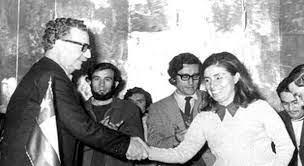
Pablo Neruda, Nobel Prize winner in Literature, was a lifelong member of the Communist Party. Intellectual and cultural personalities such as Víctor Jara, Violeta Parra, Francisco Coloane, Vicente Huidobro, Enrique Kirberg, Patricio Bunster, Isidora Aguirre, José Balmes, Roberto Parada, María Maluenda, José Miguel Varas, Volodia Teitelboim, Rolando were also part of the party. Alarcón, Marés González, Patricio Manss, Sergio Buschmann, Sergio Ortega, José Secall.
The organization was born on June 4, 1912, in Iquique, with the name of the Socialist Workers Party of Chile (POSCh) and in a party Congress held on January 2, 1922 in Rancagua, it was renamed the Communist Party of Chile. Luis Emilio Recabarren and Teresa Flores are claimed as main founders. In its more than one hundred years, political figures such as Carlos Contreras Labarca, Ricardo Fonseca, Galo González, Luis Corvalán, Gladys Marín and Mireya Baltra stood out.
On the community’s Web Portal it is indicated that the PC “is one of the most important parties of the Chilean left, having a long history within the political institutions, although in certain periods it has also been banned and persecuted, such as during the first government of Carlos Ibáñez del Campo (1927‐1931), then Gabriel González Videla outlawed them in September 1948 (cursed law), a period that lasted until August 1958 (almost every second Ibáñez government) and the “most recent persecution and attempted annihilation carried out by the dictatorship headed by Pinochet between 1973 and 1989, which meant the death of more than half a thousand of its militants, including three political leaderships in that period.”
The Communist Party “has participated in different alliances, the most relevant being the Popular Front (1938), the Popular Action Front (1958 and 1964), later the Popular Unity (1970) and recently in Nueva Mayoría (2014).” Now the participation of the Apruebo Dignidad conglomerate that formed the Government of President Gabriel Boric is added.
Today the Communist Party has among its objectives to advance in matters such as pension reform, the fiscal pact, branch collective bargaining, legal abortion, the law of equal pay for women, the end of the CAE, the health reform, and the democratization of the political system.


2024-06-20 03:27:07
#stage #commemorates #years