
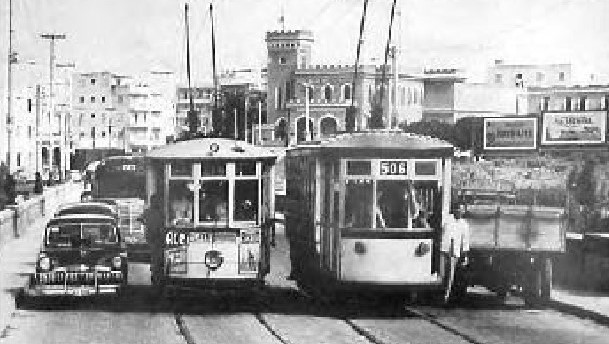
HAVANA, Cuba.- The experienced head of Príncipe’s whereabouts, Guillermo Ferreiro, ordered the departure of tram number 388 to the motorist (name given to the driver) J. Amonedo with number 3219, and the driver M. Rey Serrucho, n°1172, who would cover the itinerary of line P-2 (Príncipe-Avenida del Puerto). They left at 11:22 at night and returned to the starting point at 12:08 am on Tuesday, April 29, 1952. It was the last trip of a tram in Havana.
A photographer and a magazine journalist Bohemia and another from the newspaper Alert They traveled on that tram to document the event.
15 passengers were picked up on that trip round trip. The total collection was 75 cents, since each ticket cost only 5 cents.
The antecedents of the trams were the so-called “blood trams”, in 1859. These consisted of a small cart that ran on rails, pulled by two mules hitched to a bar, and a front horse as a guide. The coachman, from a high place, directed the animals and the vehicle.
In Cuba, the first electric tram circulated on March 22, 1901. It belonged to the North American corporation “The Havana Electric Railway Company”.
In 1906 Frank Steinhart, who was previously the first American consul in Cuba, acquired the corporation.
The electricity to move these trams was guaranteed by its own power plant, located on Colón and Blanco streets. In addition, there were substations to feed the networks.
When the Tallapiedra plant was built, the Colón y Blanco plant was deactivated to serve Havana. The building still remains, and serves other functions.
There were 32 tram lines. The routes were identified with a letter and a number. Visibly, front banners with different colors were placed for identification.
The number of teams reached 704. There were always cars in reserve. Some went out of service due to breakdowns and maintenance, but in the final years, before they were deactivated, about 400 cars were still in service.
There were 11 stops or terminals. Today only three of those buildings remain in La Víbora, El Cerro and El Vedado with different uses.
During the first half of the 20th century, trams were the most economical means of transportation used by Havana residents.
The structure of the trams changed over time. The first ones came made from the United States. They were heavier, since they had many iron pieces. Later at the El Carmelo bus stop and central workshop, on Línea and 18, El Vedado, they were assembled with imported chassis. Several elements were replaced with good quality national woods. Our climate was taken into account for the adaptations. The seats were placed with wicker grates, and others made of wood. They had eight or nine windows to guarantee good ventilation.
Its capacity ranged between 32 and 36 seated people, according to the design. But you could travel standing, depending on your capacity, on both platforms.
On the outside, the trams were painted yellow, covered in certain parts by aluminum or zinc sheets, for conservation. In front they carried signs for commercial advertisements and temporary notices, about festive or other activities.
They had a grill in the lower front part, to prevent items lying on public roads from falling under the wheels and hindering their operation.
The trams had good interior lighting and a powerful front lantern to illuminate the track at night.
When a trolley was unhooked from the cable, the driver would put the washer in its place with a stick. If there were breaks in the route, there were detours to move the equipment away and allow the rest of the trams to circulate.
In addition to transporting people, trams could transport market baskets, luggage, and even public correspondence. The rate was 25 cents per 25 kg.
Between 12:00 at night and 4:00 in the morning it was allowed to bring changes and materials, which is why the phrase became popular: “I don’t have problems, my brother, I ride him in the back of the tram, and walking ”.
Replaced by the Autobuses Modernos buses, all the trams were destroyed and buried as filler for the paving of 31st Avenue in Miramar, and around the El Vedado bus stop.
Elderly people who rode the trams remember that in addition to being comfortable and cool, they gave the opportunity, with their slow ride, to admire the landscape.
Follow our channel WhatsApp. Receive information from CubaNet on your cell phone through Telegram.
2024-04-30 04:50:54
#tram #circulated #Havana