
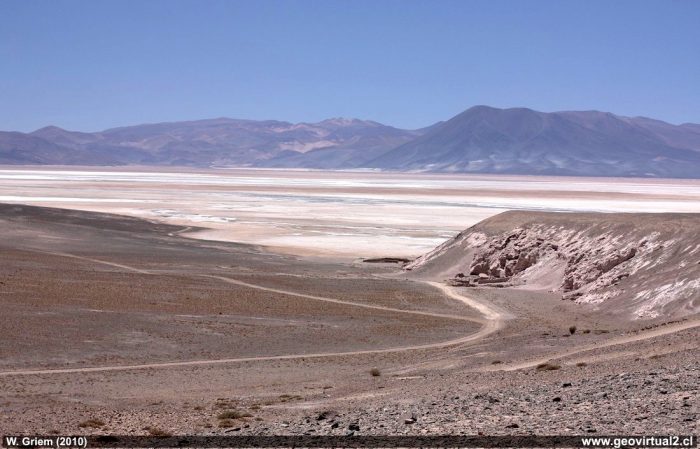
As part of the implementation of the measures committed to in the National Lithium Strategy, the Council of Ministers for Sustainability and Climate Change approved this Tuesday to begin the creation of a network of protected salt flats. Considering the already existing protected areas – equivalent to about 8% of the pre-Andean and Andean salt flats – the initiative proposes adding 27 ecosystems of lagoons and salt flats under the range of official protection, located mainly in the regions of Antofagasta and Atacama, increasing by 25% of the protection surface for these ecosystems.
In the event, the importance of protecting salt flats was highlighted within the provisions of the global framework for biodiversity, adopted at the United Nations COP15 on Biological Diversity held in Montreal (Canada) in 2022 and which set the 30×30 goal. , which proposes that 30% of the planet’s representative ecosystems be protected by 2030.
The Minister of the Environment, Maisa Rojas, explained that “we know that salt flats are fragile and unique ecosystems, and creating protected areas is an excellent tool to guarantee the survival of these ecosystems for the future. This network will help us take care of the serious crisis of loss of species and ecosystems that we face as a country and as a planet, but, in addition, the salt flats have a potential for wealth based on research and technological development, based on the knowledge of their flora, fauna and microorganisms. For this reason and much more, a hallmark of the national lithium strategy was to integrate this protection effort into its formulation.”
The network proposal was built with the best information available and based on criteria of environmental value, such as biodiversity conservation, water resource conservation, carbon sequestration, and social and cultural benefits.
In this way, the initial proposal includes all the salt flats that to date are national parks, national reserves and natural monuments, plus all those pre- and high-Andean salt flats that complete the process of creating protected areas provided for by Law No. 21,600 that creates the Biodiversity and Protected Areas Service and the National System of Protected Areas.
The approval of the network proposal is the starting point of the declaration process, which involves the detailed study of the selected salt flats. In addition, the process will include instances of citizen participation and indigenous consultation processes in the territories surrounding these ecosystems.