
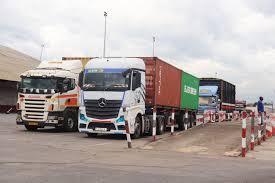
To facilitate the movement of goods, transnational zones linking roads, bridges, railways, ultramodern border posts and ports have been created. In this issue 623 of the Etats Généraux du Transport, we will discuss the corridors designed to open up countries without access to the sea.
Transport corridors make transport infrastructure the support for the liberalization of economies.
Athanase Ndayiragije, Director of International Transport at the Ministry of Trade, Transport, Industry and Tourism, presented the logistical capacities of international corridors for the development of Burundi. According to him, transport corridors make transport infrastructure the support for the liberalization of economies.
“They make the advent of free trade the essential condition for development that would benefit everyone,” he says.
Mr. Ndayiragije acknowledged the challenges related to the corridors, including the problem of transport competitiveness, due in part to the dysfunctions of the port of Mombasa and the port of Dar-es-Salaam. According to him, the port of Mombasa, originally designed to accommodate 250,000 containers, handled more than 800,000 in 2012. He also informed that road charges are high for Burundian transporters, namely 360 USD to Tanzania and 152 USD to Burundi. He also deplored the presence of non-tariff barriers along the corridors, as well as the long waiting times for unloading ships.
Prioritization of expensive road corridors
The Director of International Transport at the Ministry of Trade, Transport, Industry and Tourism points out that road corridors are used much more by Burundian economic operators compared to the railway network and waterways. However, the latter are more economical per tonne-kilometre, i.e. USD 0.05 per kilometre for a tonne compared to USD 0.09 by road. Mr. Ndayiragije also expresses concerns about empty containers on return.
Corridors of which the country is a member
“On September 2, 2006, the Republic of Burundi, the Democratic Republic of Congo, the Republic of Rwanda, the United Republic of Tanzania and the Republic of Uganda signed the Agreement establishing the Central Corridor Transit Transport Facilitation Agency (AFTTCC)”, recalls Mr. Ndayiragije.
This protocol, he continued, governs, in accordance with the principles of equal treatment, the use by the member States of the Central Corridor of the maritime port works and equipment of the United Republic of Tanzania for the transport of goods in transit or transfer in the areas controlled by the Tanzania Ports Authority or any other port operator legally established at the port of Dar-es-Salaam.
He added: “As a reminder, more than 95% of imported or exported products use the port of Dar-es-Salaam and, consequently, the Central Corridor.”
As for the Northern Corridor, Mr. Ndayiragije specifies that it is a transport corridor linking the Great Lakes countries, including Burundi, the Democratic Republic of Congo (DRC), Rwanda and Uganda to the Kenyan seaport of Mombasa. This corridor also serves northern Tanzania, southern Sudan and Ethiopia.
“A transit agreement was signed by these governments on February 19, 1985 and entered into force on November 18, 1986,” he said. The transit agreement is monitored by the Northern Corridor Transit Transport Coordination Authority (NCTTCA).
The Contracting Parties have undertaken to cooperate in the field of transport of goods and people, in particular with regard to maritime port facilities, roads, customs controls and operations, documentation and procedures. This also includes rail transport of goods, road transport, inland waterway transport, pipeline transport, multimodal transport, handling of dangerous goods, arrangements for transit agencies, traders and employees, as well as the development of an economic corridor.
Development corridors designate territories that have become attractive for the establishment of activities thanks to the construction of efficient transport infrastructures. The function of these corridors is to promote the establishment of new productive activities by improving accessibility, developing energy infrastructures and capacities for processing local production. They must encourage the development of margins, and not only of the main structuring nodes.
According to UN planners, development corridors are not just about connecting cities with better communication routes, but also about encouraging the establishment of new productive activities. Mr. Ndayiragije concludes by emphasizing that corridors must promote the development of margins, which will lead to more efficient filling of empty containers and a reduction in the costs of transport services.
#Burundi #Eco #Transport #corridors #open #borders