
Age is just a number, and everyone knows that good genes, a healthy diet, and proper exercise can make a person look younger and healthier than their age. However, it is also known that old age makes people miss. The strength and flexibility of a 50- or 60-year-old is not the same as that of a 20- or 30-year-old. It is also very important that our biological age matches your physiological age. And there are a number of simple tests that determine this.
Publika.az referring to the foreign press, these tests were prepared by Dr. D. Mark Homer, a senior lecturer in sports and training at the New York University of Buckinghamshire in England, and his team. By assessing some key determinants of fitness, he says, you can find out where your body age and physical performance stand. The results will be both your guide and a powerful source of motivation.
Can you keep your balance?
Measure how long you can stand on one leg without swaying. If you need support, do it next to a wall with your eyes open. Then try to do the movement with your eyes closed.
Points:
Age period from twenty to thirty;
Good: 60+ seconds
Medium: 35-59
Low: Below 35
Age of forty and fifty;
Good: 45+ seconds
Medium: 25-44
Low: Below 25
Sixty years and older;
Good: 30+ seconds
Average: 15-29
Low: Less than 15
Do stork yoga pose and single leg squats to improve your balance.
How strong are your muscles?

Stand still. In this case, do not let your hips fall or rise, stand as straight as possible. Then proceed to stand up or jump. Squat again and return to the previous position. Do as many jims as you can in 30 seconds.
Points:
Age period from twenty to thirty;
Good: 14-16
Medium: 10-13
Down: less than 10
Age period of forty and fifty;
Good: 12-14
Medium: 8-11
Low: less than 8
Sixty and over:
Good: 5-8
Medium: 3-4
Low: Less than 3
How active are you? – For people aged 20-60

Sit cross-legged on the floor, then stand up without the help of your hands or knees. If you can stand up without hitting your hand, arm, knee, or side of your leg, you get 10 points. If you use any support, deduct one point each time. If you sit or stand shaking, deduct half a point. Take the test twice to find out the average of your scores.
Points:
Good: 8-10 points
Medium: 4-7
Down: 0-3
How active are you? – For people over 70 years old
Sit upright in a chair with a straight back, stand with your arms folded across your chest and feet shoulder-width apart. Return to standing position, knees should be straight before sitting down again. Stand as much as possible for 30 seconds and then complete sit-ups.
Points:
60-70 years: 21 (women), 24 (men)
70-79: 17 (female), 19 (male)
80 years and over: 14 (women), 17 (men)
How flexible are your upper body muscles?
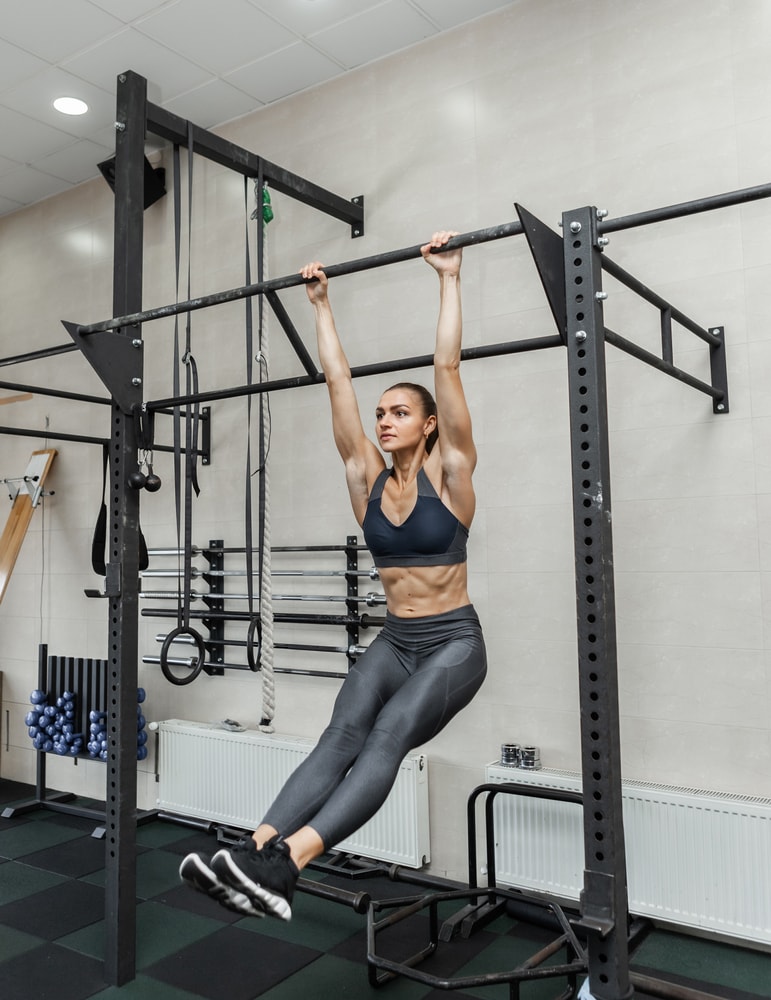
To measure this, you can use a turnstile placed in the park, playground, gym or at the door. The goal here is to stay on the turnstile as long as possible.
Points:
Twenties and thirties;
Target: 60-90 seconds
Age period of forty and fifty;
Target: 20-45
Age period of sixty and seventies;
Target: 10-15
How good is your stamina?

Measure how long it takes you to run or walk 1.60 km using a measuring device such as a treadmill, treadmill or GPS.
Points:
Twenty and thirty years;
To walk
Good: 12-14 minutes
Medium: 15-16
Down: Over 16
Escape
Good: 7-10 minutes
Middle: 11-12
Down: Over 12
Forty and fifty;
To walk
Good: 14-15 minutes
Medium: 16-17
Down: Over 17
Escape
Good: 8-11 minutes
Medium: 12-13
Down: Over 14
Over sixty years of age
To walk
Good: 15-16 minutes
Middle: 17-18
Low: Over 18
Escape
Good: 10-13 minutes
Medium: 14-15
Low: More than 15
How aerobic are you for your age?
For this, run 5 kilometers and calculate your age. A 23-year-old man who ran the treadmill in 21 minutes and 30 seconds has the same 60 percent age as a 65-year-old man who ran the treadmill in 27 minutes and 57 seconds.
How is your fitness level?
If you are in good physical shape for your age, that means your body may be biologically younger than your birth age. Norwegian scientists have been studying how fitness affects the aging process and our susceptibility to age-related diseases for years, and their results, published in the journal Medicine and Science in Sport and Exercise, show that the lower your biological age, the lower your risk of heart attacks, brain shrinkage and depression. .
#body #age #compatible #quizzes #find #answers