
It was the night between March 3 and 4, 1924. Dolmabahçe Palace on the Bosphorus was plunged into complete silence.
The residents of the palace had gone to sleep in their bedrooms after having their usual meals and dealing with other Shabina activities.
But it wasn’t long before he fell asleep when a crowd started gathering outside the palace. Prominent among them was the police chief of Istanbul, who had just received the law passed by the Grand National Assembly in Ankara.
According to this law, the democratic government ordered that the Khalifa and his family should be expelled from the country as soon as possible. So these officials entered the palace at midnight and woke up the Caliph.
Renowned historian Bernard Lewis writes in his book ‘The Emergence of Modern Turkey’ that the officials instructed the Caliph to leave Turkey at five o’clock in the morning. The caliph was overcome with emotion but then quickly restored his majesty and caliphate to the extent of asking permission to pack some of his personal belongings and requesting that provision be made for the women of his harem.
But the government was afraid that the people might revolt after hearing this news in the morning, so it was necessary to deal with the matter in the dark of night. Khalifa was hurriedly taken in a car to the nearby town of ‘Chatalja’ and from there he was sent to Switzerland by train in the evening.
But maybe even Switzerland was not a refuge for Khalifa. When the train arrived in Switzerland, Khalifa Abdul Majeed, the heir to the family that ruled Europe and Asia for 600 years and the leader of ten million Muslims, was stopped at the border because a person who had more than one wife was allowed into Switzerland. Permission cannot be granted.
According to Swiss law, a man was not allowed to have more than one marriage. However, after some negotiations and realizing the grandeur of the occasion, the Khalifa was temporarily allowed to enter, but with the condition that the Khalifa’s marital status would be investigated later.
How it all happened, let’s see through the corridors of history.
Lord Patrick Kinross writes in his book “Ata Turk: Rebirth of a Nation” that the nationalists in power in Turkey and their leader Mustafa Kemal’s antagonism with the Ottoman Empire and Caliphate was not a hidden thing.
After the defeat of the Ottoman Empire in the First World War, the victorious Allies began to divide its remaining parts. After seven years of continuous war, the Turkish nation had no strength left for any resistance.
In such circumstances, while Sultan Abd al-Wahid and his government had surrendered everything to the allies, there were some elements in the Turkish army who were not willing to give up the country so easily.
Therefore, many small and large armies came into existence in the interior areas of the country, which were willing to resist the Allies. These armies were supported by a few generals in the background who provided them protection against the government.
Among them was a general, Mustafa Kamal, who emerged as a hero during the Great War. He now held the position of ADC to the Sultan, although his covert sympathies were with the resistance army.
It was a period of inaction in the life of Mustafa Kamal. He had become suspicious in the eyes of the British. His name was included in the list of people whom the British wanted to arrest and deport to Malta.
On the other hand, he had become ‘Afsar Bukar Khas’ in his job as well. “He was very sad and sick,” Kinross said. His face was wrinkled and his hair turned white.
They lacked money. His clothes were somewhat worn and his shoes were worn at the heels. He had no friends and had become suspect in the eyes of both the Turks and the British.
They used to wander around the streets or sit in coffee houses for no reason. They were miserable and despondent. They had no hope and no plan.’
If the timing of a person is bad, then the right decisions also prove to be wrong. Something similar happened to Sultan Abdul Waheed.
The Sultan, after consultation with his government and allied forces, decided to send an officer who could deal with these resistance forces at the local level to crush these rebellions running across the length of the country.
Lord Patrick wrote that when names were called for this important campaign, someone suggested the name of Mustafa Kamal. The government did not trust him, so for a few days there was a debate whether he should be arrested and exiled or made the governor.
When this matter came up in the cabinet, Shaykh al-Islam also opposed it on the grounds that Mustafa Kamal was said to abolish the Caliphate and ban religion.
However, the Cabinet on April 30, 1919, granted him Governor’s license and sent him to the troubled region. The result of this decision was what it could have been.
Mustafa Kamal reached Anatolia and gathered all the resistance groups under his leadership and declared the War of Independence.
He went from village to village and held rallies and persuaded the people to support him. Meanwhile, when the government came to know of Kamal’s activities, his appointment was canceled and the army was ordered not to follow his orders. But now it was too late. Every soldier of the army now considered Mustafa Kamal as his leader.
Lord Eversley has written in ‘The Turkish Empire’ that on the other hand, in April 1920, a conference of the Allies and Sultan’s representatives was held at San Remo, in which the territory of Syria was given to France, while the territory of Iraq and Palestine was given to Great Britain.
Parts of Anatolia (present-day Turkey), the heartland of the Turks, were divided among the Greeks, Italians, and Armenians. This treaty was signed in early 1920 by the Allies and the Ottoman Sultan’s Prime Minister, Farid Pasha, and became known as the Treaty of Sevre.
This treaty was practically a death warrant for Turkey, but the Sultan accepted it. According to British War Secretary Winston Churchill, this agreement ‘fueled the fire of hatred which the Western world had kindled in Turkey by its behavior.’
Thus, Mustafa Kamal gained wider popular support to resist the allies and the Sultan’s army, and after successive campaigns he first defeated the Sultan’s army and then inflicted a humiliating defeat on the Greeks.
At the same time, he inaugurated his new nationalist parliament in Ankara to bring his actions into law. This leadership was already popular at the national level, now it was being recognized at the international level as well.

According to experts, unless Pakistan reduces its dependence on exports, pressure on the rupee will continue (AFP).
The murder of British Prime Minister Boris Johnson’s great-grandfather
After the successes that Mustafa Kamal had achieved on the military and diplomatic front, he had practically become the head of the Turkish state. The people had completely forgotten Sultan Abdul Wahid VI.
Finally, the Sultan’s power in Constantinople remained nominal. The nationalists took over the administration of the city and started making their own decisions.
Those who rebelled against the revolution were caught and punished. Great-grandfather of the current British Prime Minister Boris Johnson, Ali Kamal had been the Minister of Interior in the Sultan’s cabinet and had declared Mustafa Kamal to be obligatory during his tenure.
He was arrested by the Nationalist police, but as he was being taken to prison, a mob attacked and stoned him on the way.
Ali Kamal started his career as a poet and journalist. Once, while traveling in Switzerland, he met a British woman, Winifred Brun Johnson, in a hotel on the shores of Lake Lucerne, and they became engaged.
Winifred wanted to marry Ali Kamal but he was aware of the religious difficulties regarding this marriage and hence he hesitated. However, they met again in Switzerland the following year and decided to get married.
Now the problem was where to find such a Qazi who agreed to marry a Muslim and a Christian. After some hesitation, this problem was also resolved and they got married in a church in London. This incident is from 1903.
After the marriage, a son was born to Ali Kamal who did not survive for more than a few months. After that a daughter Salma and a son Usman Ali were born.
After the birth of Usman Ali, Winifred could not live long and Ali Kamal also became a victim of financial difficulties. So he left the children with their grandmother Margaret Johnson in London and came to Istanbul himself.
The grandmother raised the children and changed the name of the younger Usman Ali from Usman Ali Kamal to Wilfred Johnson. Wilfred spent his childhood in poverty, but grew up to join the British Air Force and serve as a pilot in World War II.
His son Stanley Johnson became active in politics and became a member of the European Parliament. British Prime Minister Boris Johnson is the son of this Stanley Johnson.
The Sultan then realized that his days in Constantinople were numbered. At the last opportunity, he tried to compromise with the nationalists in many ways, but it did not work out.
Meanwhile, Mustafa Kamal got a pretext to end the nominal rule of the Sultan.

Mustafa Kemal Pasha, founder of modern Turkey, in 1918 (Public Domain)
As it happened, a peace conference was held in Lausanne by the Allies, in which separate invitations were sent to the Sultan’s government and the new government to attend.
The nationalists made a lot of noise about the incident that the sultan was causing division in the Turkish government and nation. Speeches were made in the assembly that it would amount to treason if the Sultan sent his representatives separately. Now the iron was hot and the psychological moment had arrived to end the empire.
According to Bernard Lewis, on November 1, 1922, Mustafa Kamal presented a law in the assembly that decided to separate the Sultanate and the Caliphate.
This law stated that the Sultanate, which represented worldly authority, would be abolished while the Caliphate, which represented spiritual authority, would be maintained. For this purpose, the caliphate will be given to a prince whose position will be religious and not related to politics.
This law was strongly opposed by the Ulama, but Mustafa Kamal made a strong speech and threatened to use force to silence the opposition.
He said, ‘If the members of the assembly and other friends look at this matter in a natural way, I think they will agree with me. If they don’t agree, the truth will soon emerge, but in the process some heads will probably fly.’
This section contains related reference points (Related Nodes field).
The result was that the scholars present in the assembly immediately revised their position and this law was passed. According to Kamal, “Thus, after the fall of the Ottoman Empire, its preparation and burial were also completed.”
According to Kinross, during this time the sultan remained in his palace while many of his staff deserted him. Kamal did not depose him by force because he was afraid of public anger.
A few days later, the Sultan summoned the British ambassador, Rumbold, and sought assurances of his assistance. Rumbold told him that Britain could now only deal with the Ankara government. However, he promised that the Sultan’s life would be protected at all costs.
On November 10, the Sultan went to the mosque for Friday prayers, and the Imam did not mention the name of the great king and the royal family in his sermon, but only Amirul Momineen and the Caliph. Immediately after this prayer, the Sultan sent a message to the British ambassador that his life was in danger and that he should be removed from here immediately.
So, early in the morning on November 11, Sultan Wahid-ud-Din VI reached a British warship with his treasure and a crew of nine in two British ambulances, marked with the Red Cross, and then through this ship. Departed for Malta.
He left his five wives at Qasr Yildiz and requested the British to deliver them to him later. Nationalists rejoiced at the Sultan’s self-escape.
Election of a new non-political caliph
After the Sultan’s escape, on 16 November 1922, the Grand National Assembly elected his cousin and Crown Prince Abdul Majid as Caliph. He was 54 years old and was excluded from politics by the Sultan due to his liberal views.
Abdul Majeed accepted this post as per the terms set by the assembly. On this occasion, he was given the robe of the Prophet of Islam and other blessed things, but he was not given the sword, which was a symbol of the Caliph’s worldly authority.
Turkey is ruled by a drunkard
Turkish historian Khaleda Adeeb wrote in ‘The Turkish Ordeal’ that Mustafa Kemal used to drink alcohol openly. When foreign newspapers wrote about his drinking, he supported them and said that if such things were not written, people would not understand me.
Once when he was sitting in a restaurant in Smyrna (Izmir) drinking wine, the governor ordered the curtains to be drawn from the windows.
Kamal protested and said, ‘If you do that, people will think that we are dancing women on the table. Let them see that we are only drinking wine.’
A French journalist wrote that ‘Turkey is ruled by one drunk, one deaf (Prime Minister Ismat Anonu) and three hundred dumb (members of the assembly).’
To this Kamal replied, ‘You have made a mistake, only a drunkard is ruling Turkey.’
These words of Mustafa Kamal were the weapons of his political opponents. This lifestyle of theirs was used for propaganda against them. For a long time there were rumors that Mustafa Kamal intended to destroy Islam and oust the Caliph.
He had expressed his intention several times in public.
Interests of the new Caliph
On the other hand, the newly elected Khalifa Abdul Majeed had no interest in politics. He was fond of gardening and painting and spent most of his time in these two hobbies.
There was no element of intrigue in his nature and he was a simple, honest, humble and noble person. He had lived a very simple life in his palace since his youth, but now when he was elected Caliph of the Muslims, he tried to fulfill this position with integrity.
Earlier, the Caliphs used to use horse-drawn carriages, but like Sultan Muhammad Fatih, he used to ride a white horse to offer prayers, followed by a security guard and people would applaud him on the way.
Although Abdul Majeed had no political ambitions, his personality acted as a magnet for all political opponents of Kamal and they all rallied around him one after the other.
All the remnants of the Ottoman Empire, i.e. the old ministers, scholars, political leaders and military generals, were gathering around him and their intention was to make the Caliph the constitutional president according to the previous constitution and establish the government under him.
HC Armstrong wrote in his biography of Kamal Ata Turk that the Caliph’s personality had now become a threat to Mustafa Kamal’s power and Mustafa Kamal did what any good dictator would do in such a situation. They began to look for an opportunity to divert the Caliph.
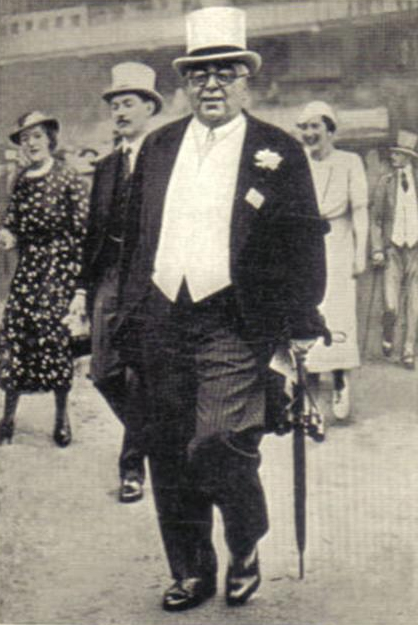
Sir Aga Khan III was one of the founders of the Muslim League (Public Domain).
The Khilafat Movement of India: A Letter from the Aga Khan and Syed Amir Ali
Meanwhile, Mustafa Kamal’s parrot was speaking in India. The Muslims of India considered him the savior of the entire East. Turkey was the only eastern country that resisted the Allies and was led by Mustafa Kemal.
Constant letters from India assured Mustafa Kamal and his associates of their support.
At that time, Mustafa Kamal had become a household name in every household in India, especially in Punjab, and his large pictures were displayed in every shop. Along with this, the poor Muslims here were also collecting donations for the struggle of Mustafa Kamal.
According to Armstrong, a total of £120,000 was sent as a donation from India. Some of this money was used to pay salaries to the Turkish army, while most of the money was spent on the construction of the new parliament in Ankara and the establishment of the first national bank.
But when the rumors of Mustafa Kamal banning the caliphate became hot, two leaders of Indian Muslims namely Aga Khan III and Syed Amir Ali decided to write a letter of protest on behalf of Indian Muslims.
The letter demanded that the rank of Caliph be considered. This letter was also sent to the newspapers of Constantinople. Fortunately, the letter was published in newspapers before it reached the Ankara government.
Mustafa Kamal got a chance. He looked at the situation of Aga Khan. He was a devout Indian Muslim who lived in England.
They kept race horses. They used to wear the clothes of the British and were the same as the British. So Mustafa Kamal announced that he was a special agent of the British and on his behalf, Britain was interfering in the internal affairs of the Turks.
Now it was Atatürk’s left hand game to use this letter as a basis to incite agitation. So the narrative was developed that since the British had not been able to destroy Turkey through Greece, they were now conspiring through their agents.
Aga Khan’s track record was also very helpful in this regard. During the war, the Aga Khan, as a religious leader, had issued a fatwa in support of the British, which became widely known throughout India.
According to a report in Paisa newspaper, Aga Khan’s party had also passed a resolution of loyalty to the British in Multan.
According to Armstrong, Mustafa Kamal had his chance. To moderate public opinion, a French journal first published the news that the caliphate was unnecessary.
In an interview with this journal, Kamal said, “Khilafah means nothing but administration or government.” Now that another administration and government has come into existence, there is no need for this post. The caliphate had never established authority and power over the entire Islamic world as the papacy had over the Catholic world.
Newspapers that printed Aga Khan’s letter were prosecuted and other newspapers were strictly instructed to propagate similar letters.
Based on this propaganda, a law was passed on the 3rd of March, the fourth anniversary of the assembly, and the same night the Khalifa was expelled.
The Caliph and every member of the Ottoman family was banned from residing in Turkey. Khalifa spent the rest of his life in France, drawing on painting and music. In the beginning, they had no money and a roof over their heads was very difficult.
When he died of a heart attack in 1944, he was not even allowed to be buried in Turkey. His remains were preserved in a mosque in France. Thus the last and perhaps the greatest caliphate of Islam came to an end.
#letter #Aga #Khan #served #pretext #Ottoman #Caliphate
2024-06-21 03:16:55