
“Making words an aesthetic game is the highest thing that a human being can do,” said Julio Cortázar, who considered literature as a game: he played with genres, with forms, but also with language and believed in chance. , because this “does things very well, better than reason.”
The Argentine Julio Cortázar (Brussels, August 26, 1914 – Paris, February 12, 1984) was one of the four Ibero-American writers who revolutionized, along with the Colombian García Márquez, the Peruvian Vargas Llosa and the Mexican Carlos Fuentes, Latin American literature since the fifties, mainly with his short stories and stories, because although a novelist and poet, he stood out above all for being an exceptional storyteller.
Although he did not believe in what they called the boom of Latin American literature, first – he said – because he hated using terms in English, he loved his Spanish language, and second because it was very pretentious, what goes up like foam, comes down like crazy. way, he thought, giving a false sense of security that he didn’t see. However, he valued it because thanks to this phenomenon, Latin American authors were recognized and published, and the public stopped reading only European or North American authors.
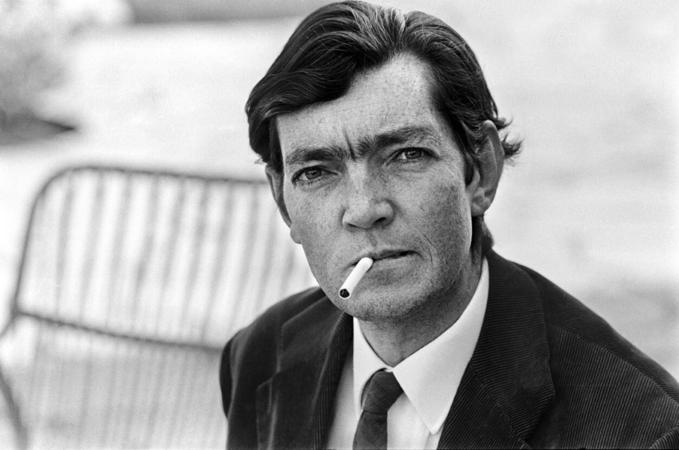
Julio Cortázar was distinguished from afar by his long figure and his boyish face of eternal youth, for being the Cronopio Mayor, the inventor of games, the renewer of the word: “He was the tallest man that could be imagined, with a perverse child’s face inside an endless black coat that looked more like a widower’s cassock, and his eyes were wide apart, like those of a bull, and so oblique and diaphanous that they could have been those of the devil if they had not been “subject to the dominion of the heart,” is how a then-young journalist named Gabriel García Márquez described him when he saw one of his literary idols, whom he waited for several days at the Old Navy café in Paris to simulate a chance meeting.
Among the literary inventions that that big guy, sensitive, unsociable like a cat, an animal he adored, left us, Cortázar who liked to enjoy solitude, cinema, boxing and especially jazz, (he had a weakness for the saxophonist Charlie Parker), there are the Cronopios, idealistic, sensitive and naive creatures that differ from other beings imagined by the writer, such as the Famas, pretentious and formal, and the Esperanzas, just the opposite, boring and ignorant.
Precocious and compulsive reader
He was a precocious reader, Cortázar said in his interviews that his passion for reading began at the age of 9, just when his father abandoned the family, a hobby that became compulsive, he read so much – he said – that his worried mother came to consult him. even with the doctor.
Cortázar was born due to the profession of his father, a diplomat, in the Argentine embassy in Brussels on August 26, 1914, days before the German invasion of Belgium, but at the age of 4, his family returned to Buenos Aires, where he lived until 1951, when fed up with the Peronist government, he settled in Paris, where he lived most of his life, worked as a translator for UNESCO and where he wrote much of his work.
In Argentina he had worked as a high school teacher and later at the university as a professor, at the young university of Cuyo in Mendoza, although he did not have any university degree, Cortázar maintained, like the rest of his colleagues, his commitment to the left. politics, which led him to show his sympathies for the Cuban revolution, which seemed to offer a model of socialism very different from Soviet Stalinism, and for the Nicaraguan revolution in its initial stage, with Pinochet’s coup d’état and later Videla’s Argentine dictatorship being what It made him take a position that definitively distanced him from writers he had admired so much, such as Borges, who bowed to the Videlist dictatorship.
When he died in Paris, on January 12, 1984, he was accompanied by his first wife, Aurora Bernárdez, who took care of him at the end of his days, his very young wife, 32 years younger than him, and his great love having disappeared two years earlier. , Carol Dunlop, died aged 36. It has always been said that Cortázar died of leukemia, perhaps because when he fell ill the AIDS virus was not yet known, as the Uruguayan writer and great friend of the Argentine, Cristina Peri-Rossi, maintains. Rossi points out that he contracted this disease from an emergency blood transfusion to which he was subjected after suffering a serious stomach hemorrhage in 1981, and which turned out to be contaminated, obtained without safety filters, a scandal that would lead even the minister to resign. of French Health. Near the end, the writer asked to be buried next to Carol in the Montparnasse cemetery in Paris.
Inventor of the counter-novel
A few months ago, in June 2023, the 60th anniversary of the publication of ‘Rayuela’ (1963) was commemorated, considered a masterpiece by Cortázar, which began, as we have said, the boom in Latin American literature.
In both Hopscotch and Bestiario, History of Cronopios and Fames, Around the Day in 80 Worlds, Los Autonautas de la Cosmopista, written with Carol Dunlop, in all of them Cortázar left the mark of his originality, his deep sensitivity and his ability. to see the magical side, the special thing in simple things.
‘Hopscotch’ is a strange, different novel, which leaves the ends of the chapters open to involve the reader in jumping to any other chapter, as if it were a game of hopscotch. Cortázar set out to make a novel that would break all the structures of the traditional novel, which is why he has called it a counter-novel. But as Mario Vargas Llosa pointed out “Hopscotch is not an experimental novel since it is not an experiment, a world of test tubes and calculations, dissociated from life, from pleasure, but rather it overflows with life from every pore; “It is a conquest, a truly new world of literary and interpretive possibilities.”
Cortázar divides the 155 chapters that make up the novel into three parts: On the side there, On the side here and On other sides, and suggests that we read it in two ways: progressively, in the traditional way, or “skipping” through all the chapters. randomly. There is even the option for the reader to choose their own route. It is, therefore, an exploration with multiple endings, an incessant search through unanswered questions, although, without a doubt, the most evident thing is not the breaking of the linearity of the narrative but rather making the reader -whether he wants it or not- the main agent of that universe.
He considered literature as a game and in that game it was also the turn of language. Cortázar invented glíglico, to which he dedicates chapter 68 of Hopscotch, an invented language that imitates the structure of Spanish, but that changes the sounds and plays with words without limitations. In just a few paragraphs he gives us intimate and suggestive language that narrates the love encounter between La Maga and Horacio Oliveira.
In the end, Cortázar seduces because it changes the vision and perception of reality, which is broken down into its fantastic aspects, allowing the reader to perceive different “realities” or subjectivities.
It is true that as an aesthetic and narrative experiment Hopscotch is brilliant, an essential work, however, there are also more critical voices for whom the work is an experience at the very least: difficult, for example in its insistence on including a thousand and one jazz references, so many that they are excessive, so far from inciting interest in this genre, it overwhelms and gives the sensation of a certain exhibitionism.
His biographer Miguel Herráez assures that Cortázar was not bothered by this criticism; he knew that he was a writer for minorities because he was aware that he was opening a new narrative path, a new path that had not been opened before. However, this new path was not followed in the genre of the novel, although the renewal of his story had a lot of influence.
As it is often said, if “One Hundred Years of Solitude” is the reader’s novel, “Hopscotch” is the writer’s. Be that as it may, the truth is that Julio Cortázar made us see literature in a different way, he vindicated the story, where the intimate relationship between magic and everyday life that distills all of his writing stands out more. It is not magical realism, but magic is present, in everyday life, like the element of surprise, the magic of people’s mysteries, trust in chance or hope… “We walked without looking for each other, but knowing that we were walking to find each other.” ”.